


Table of Contents
- Why Assessing Fabric Quality Online Is Difficult
- What Is GSM in Fabric and Why It Matters
- Natural vs Synthetic Fabric Pros and Cons
- How to Tell If a Garment Is Well-Constructed
- Reading Product Listings and Specifications
- Red Flags of Low-Quality Fabric to Avoid
- Putting Your Fabric Quality Assessment to Work
- Frequently Asked Questions
Last Updated: September 9, 2026
Why Assessing Fabric Quality Online Is Difficult
Buying clothes without touching them first is a genuine gamble, because fabric quality is ultimately a tactile experience. When you shop in person, your hands instantly register the difference between a flimsy sheen and a dense, substantial weave. Online, that sensory input is gone, leaving you to make a significant purchase decision based on pixels and marketing copy.
The core challenge is that sellers use the same few adjectives, like "premium" or "soft," regardless of what they are actually selling. This makes it nearly impossible to distinguish a well-made garment from a fast-fashion piece without a structured approach. We believe the solution is to translate physical cues into digital ones, teaching you how to assess fabric quality online by reading specifications, construction details, and even return policies as a language of their own. Below, we'll show you exactly how to decode those signals so you can shop with confidence.
What Is GSM in Fabric and Why It Matters
GSM, or grams per square meter, is the standard metric for measuring fabric weight, and it is the single most reliable number you can find in a product listing (peer-reviewed research).
This figure tells you how dense and substantial a material is. A light fabric might weigh around 130-150 GSM, which is typical for a breezy summer shirt. A mid-weight fabric falls in the 180-200 GSM range, offering a balance of structure and breathability. Heavier fabrics, starting around 220 GSM and moving up to 300 GSM or more, feel substantial, drape well, and generally last longer because there is simply more material to withstand wear and tear.
When you are evaluating a garment, look for this number in the product details. If a listing omits it, that is often a sign that the fabric is on the lighter side. For example, a quality heavyweight tee is often around 6.1 oz, which translates to roughly 207 GSM. This weight gives the shirt a "broken-in" feel from the first wear and prevents it from becoming see-through or losing its shape after a wash.
Natural vs Synthetic Fabric Pros and Cons
Once you know the weight, the next question is the fiber content. The choice between natural and synthetic fibers is not about one being universally better, but about knowing which is right for your needs. However, to assess quality online, you need to move beyond simple labels and understand what the specific fiber blend percentages actually tell you about performance.
Natural fibers like cotton, linen, and wool are prized for their breathability and comfort. Cotton, in particular, is absorbent and soft against the skin, making it ideal for everyday wear. Its main drawback is that it can wrinkle and shrink if not cared for properly. Synthetic fibers such as polyester and nylon are often added for durability, stretch, and wrinkle resistance. However, they tend to trap heat and moisture, which can be uncomfortable for extended wear.
Predicting Shrinkage and Colorfastness from Fiber Blends
A key skill in online assessment is predicting how a garment will behave after washing, based solely on its fiber composition. This is where a basic understanding of textile science gives you a significant edge over casual shoppers.
- Cotton: Expect up to 3-5% shrinkage in the first wash for untreated or non-sanforized cotton (peer-reviewed research). A listing that mentions "pre-shrunk" or "sanforized" indicates the fabric has been treated to minimize this, a hallmark of better manufacturing. For color, pure cotton dyed with reactive dyes (often indicated by the term "reactive-dyed") holds color well, but direct dyes are cheaper and will fade noticeably.
- Wool: Wool is naturally elastic and resists wrinkling, but it is prone to felting and shrinkage in hot water. A high-quality wool garment will specify "superwash" or "machine-washable" wool, which has been treated to prevent this. If a listing is vague about washability for a wool item, assume it requires hand washing.
- Polyester and Nylon: These synthetics are essentially non-shrinking and highly colorfast because the dye is embedded in the fiber during manufacturing. This is why a 100% polyester garment will look the same after years of washing. The trade-off is that they can trap odors and heat.
- Blends: The blend ratio is your best predictor of care requirements. A 60/40 cotton-polyester blend will shrink less than 100% cotton but more than a 50/50 blend. A garment with 2-5% spandex or elastane will retain its shape well but can lose its stretch over time if exposed to high heat in dryers.
The Role of Certifications as Quality Proxies
When a product listing includes third-party certifications, you are getting a verifiable signal of quality that goes beyond marketing language. These certifications require audits and testing, which adds a layer of accountability.
- GOTS (Global Organic Textile Standard): This is the gold standard for organic fibers. It verifies that the entire supply chain, from harvesting to manufacturing, meets strict environmental and social criteria. Seeing GOTS on a cotton product means the fiber is not only organic but also processed without toxic chemicals.
- OEKO-TEX Standard 100: This certification tests for harmful substances in the final product. It is a strong indicator that the fabric is free from regulated levels of heavy metals, formaldehyde, and other irritants. It does not guarantee organic farming, but it does guarantee a baseline of chemical safety.
- Fair Trade Certified: While not a direct measure of fabric hand-feel, this label ensures that the people who made the garment were paid a fair wage. It is a proxy for a brand that values its supply chain, which often correlates with better material selection.
| Fiber Type | Shrinkage Prediction | Colorfastness | Key Certifications to Look For |
|---|---|---|---|
| 100% Cotton (untreated) | High (3-5%) | Variable, depends on dye type | GOTS, OEKO-TEX |
| 100% Cotton (pre-shrunk) | Low (1-2%) | Good with reactive dyes | GOTS, OEKO-TEX |
| Polyester/Cotton Blend | Low to Moderate | Excellent | OEKO-TEX |
| 100% Polyester | Very Low | Excellent | OEKO-TEX |
| Wool (Superwash) | Low | Good | OEKO-TEX, Responsible Wool Standard |
By learning to interpret these blend percentages and certifications, you are no longer guessing at quality, you are reading the technical specifications that manufacturers use to define their own products. This is the difference between hoping a shirt will last and knowing it will.
How to Tell If a Garment Is Well-Constructed
Fabric quality is only half the story; the construction determines whether a garment will hold its shape and seams over time. A common mistake is focusing solely on the material and ignoring the stitching, which is where cheaper items often fail.
Start by looking at the seam integrity. In product photos, zoom in on the areas where panels are joined. A well-constructed garment will have tight, even stitching with no loose threads or skipped stitches. The seams should lie flat and not pucker. You should also check the stitch density; generally, more stitches per inch means a stronger seam that can withstand stress without popping.
Next, consider the finishing details. A quality garment will have reinforced stitching at high-stress points like the shoulders, crotch, and pockets. Look for a clean hem and well-attached buttons or zippers. If the listing shows a close-up of the collar or neckline, check that it is a separate piece of fabric (a ribbed band) rather than just the main fabric folded over. This ribbed collar is a hallmark of better construction because it retains its shape and resists stretching out. In practice, these details are what separate a tee that survives a year of weekly washes from one that loses its shape after a month.
Reading Product Listings and Specifications
This is where you put your detective hat on and learn to read between the lines of a product description. The listing is your primary source of data, so you need to parse it for specific information rather than just absorbing the marketing language.
Your first step is to search for the textile composition. Look for clear percentages like "100% cotton" or "60% cotton / 40% polyester." If the listing only says "soft cotton blend," that is a sign of lower quality. Next, look for the fabric weight in GSM or ounces, which we discussed earlier. Finally, examine the "care instructions." Garments that require dry cleaning or delicate handling might be made from high-quality materials, but they also signal higher maintenance. Conversely, a well-constructed everyday item should be machine washable.
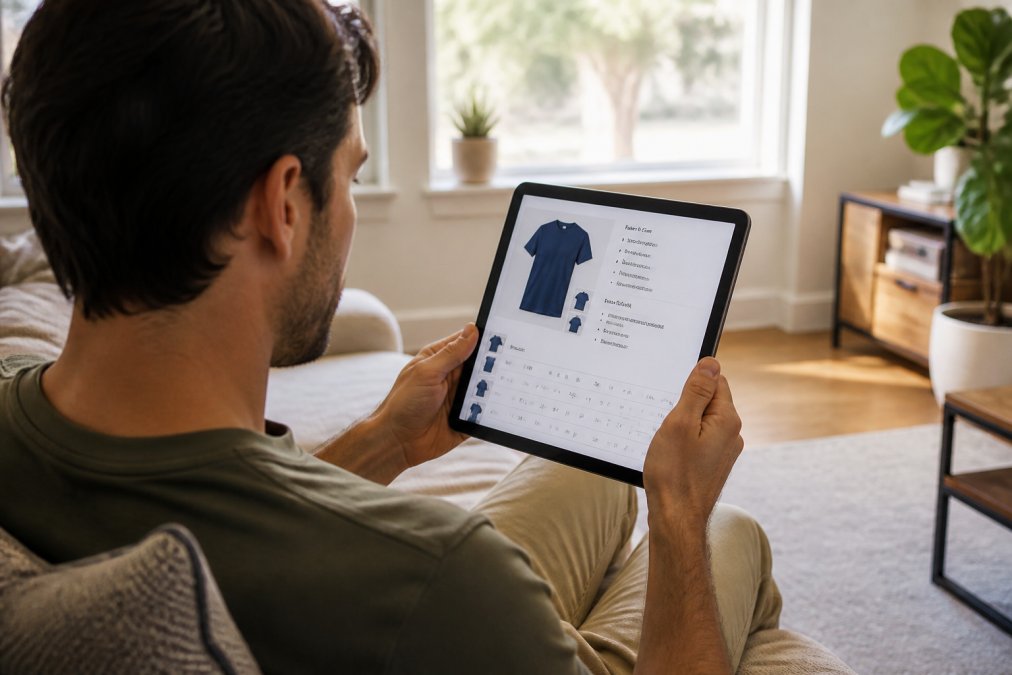
Pay attention to the language used. Words like "garment-dyed" are significant. This process means the fabric is dyed after the shirt is sewn, which gives it a softer hand feel and a unique, lived-in look that cannot be replicated by cheaper printing methods. This level of detail in a description indicates a manufacturer who cares about the product. When you find these specific terms, you are on the right track.
Red Flags of Low-Quality Fabric to Avoid
Knowing what to avoid is just as important as knowing what to look for. There are several clear signals that a garment will not stand the test of time, even if the photos look appealing.
The most obvious red flag is a lack of specification. If a listing does not state the fiber content or fabric weight, the manufacturer is likely hiding the fact that the materials are cheap. Another major warning sign is the use of overly airbrushed or heavily filtered photos that obscure the fabric's true surface texture. You should be able to see the weave or knit structure clearly.
Also, be wary of extremely low prices. While a bargain is appealing, the cost of raw materials and manufacturing sets a floor for how cheap a quality garment can be. If a "heavyweight" shirt is priced well below the market average, the fabric is probably not as heavy as advertised. Finally, look at the model photos. If the clothing appears to be heavily pinned or clipped in the back to create a better fit, it is a sign that the garment's actual drape and cut are not flattering. This is a common trick in e-commerce that hides poor fit and fabric drape.
Putting Your Fabric Quality Assessment to Work
By now, you have the tools to decode the technical aspects of a garment. The final step is to apply these criteria to your shopping habits and consider the entire purchasing experience as a signal of quality.
A strong return policy is one of the best indicators of a brand's confidence in its products. If a company offers free, easy returns, they are essentially removing the risk from your purchase. This is a powerful signal because it means they expect the garment to meet your expectations. If you are still hesitant after your analysis, a generous return policy gives you the safety net to try the item in person without any financial risk. This practical safeguard is often the deciding factor for many who are skeptical about online shopping.
When you find a brand that consistently provides detailed specifications, uses quality materials like heavyweight cotton, and stands behind its products with a fair return policy, you have found a reliable source. Our collection focuses on hand-selected fabrics and timeless designs. Our graphic tees, for instance, are heavyweight and garment-dyed, offering that soft, lived-in feel right away. We include the full details about our fabric and construction so you can shop with the confidence that comes from knowing exactly what you are getting.

Frequently Asked Questions
How can you tell if fabric is high quality just by looking at photos?
Look closely at the photos for clues about fabric quality. Examine the weave or knit structure for consistency. Check if the fabric drapes naturally or looks stiff and flat. Look at the stitching on seams and hems for evenness. High-quality fabric often appears in close-up shots that show texture. If the listing only shows the design and not the fabric texture, that is a sign to ask the seller for more details.
What does 400 GSM mean in fabric?
GSM stands for grams per square meter, a measurement of fabric weight. A 400 GSM fabric is quite heavy and substantial. For context, a standard t-shirt is often around 150-180 GSM, while a heavier sweatshirt might be 300-400 GSM. A 400 GSM fabric suggests a dense, durable, and warm material, suitable for outerwear or heavyweight garments. This weight indicates a premium feel and better longevity compared to lighter fabrics.
Does higher thread count always mean better fabric quality?
Not always. Thread count measures the number of threads per square inch, but a very high number can include multi-ply threads that inflate the count without improving quality. A more reliable indicator is the quality of the yarn itself and the weave structure. For example, a 300-thread-count fabric made from long-staple cotton can feel better than a 600-count fabric made from lower-quality fibers. Focus on fiber content and weave over thread count alone.
What are the red flags of low-quality fabric when shopping online?
Several red flags suggest low-quality fabric. Vague descriptions like 'soft material' without specifying fiber content are a major warning. A very low price for a supposedly premium natural fiber like silk or merino wool is also suspicious. Check the care instructions; fabric that requires dry cleaning might be high-maintenance. Look at customer photos and reviews for signs of pilling, shrinkage, or color fading after washing. Also, a seller with a poor return policy indicates they may not stand behind their product's quality.
Buying quality clothing online is a skill that comes down to knowing which details matter. By focusing on fabric weight, fiber content, and construction, you can filter out the noise and find pieces that will last. At XEDITION77, we take the guesswork out of the equation by using hand-selected fabrics designed for both comfort and durability, so you can get the quality you deserve without the risk. Get started with XEDITION77 and find apparel that holds up to your standards.


