


Table of Contents
- Maple Store Alternatives: What to Look for in Premium Apparel
- Quick Comparison: Quality Over Brand Name
- High-Quality Fabric Guide for Apparel: The Foundation of a Premium Feel
- Why Fabric Composition Beats a Flashy Label
- Premium Apparel Fit and Sizing: Consistency You Can Count On
- How to Build a Capsule Wardrobe with Premium Pieces
- Best Premium Men's Clothing Brands: A Fresh Perspective
- Longevity and Care: Making Your Investment Last
- Frequently Asked Questions
Last Updated: September 7, 2026
Maple Store Alternatives: What to Look for in Premium Apparel
The search for Maple Store alternatives for premium apparel usually starts with a familiar frustration: you paid for a label and got fabric that pills after three washes. According to industry guidance on textile durability standards, the real test of premium apparel is how the garment is constructed, not the logo stitched on the chest. At XEDITION77, our collection is built around this principle, using hand-selected fabrics that blend comfort with timeless refinement.
The market is flooded with overpriced basics riding on brand recognition. What separates a worthwhile investment from a regret is measurable: fabric weight, seam construction, and whether the brand publishes its material sourcing.
A $45 sweatshirt from a brand that openly specifies its 50/50 cotton-poly blend and OEKO-TEX certified dyes is a smarter purchase than a $90 blank from a label that hides its supply chain (oeko-tex.com).
Quick Comparison: Quality Over Brand Name
Premium apparel is defined by measurable specifications, not marketing buzzwords. Check three things first: fabric weight in ounces per square yard, fiber composition, and seam construction. A heavyweight fabric, typically 6 ounces or more for a t-shirt, holds its shape. Tubular knit construction, which means no side seams, resists twisting and fraying.
| Feature | What to Look For | Why It Matters |
|---|---|---|
| Fabric Weight | 6 oz/yd² or higher for tees, 8 oz/yd² for hoodies | Heavier fabric drapes better and survives more washes |
| Fiber Content | 100% cotton or quality cotton-poly blend | Determines breathability and durability |
| Seam Type | Tubular knit or double-needle stitching | Prevents twisting and premature wear |
| Dye Process | Garment-dyed or OEKO-TEX certified | Indicates colorfastness and ethical production |
| Fit Consistency | Published size charts with tolerance levels | Ensures the size you order fits like the last one |
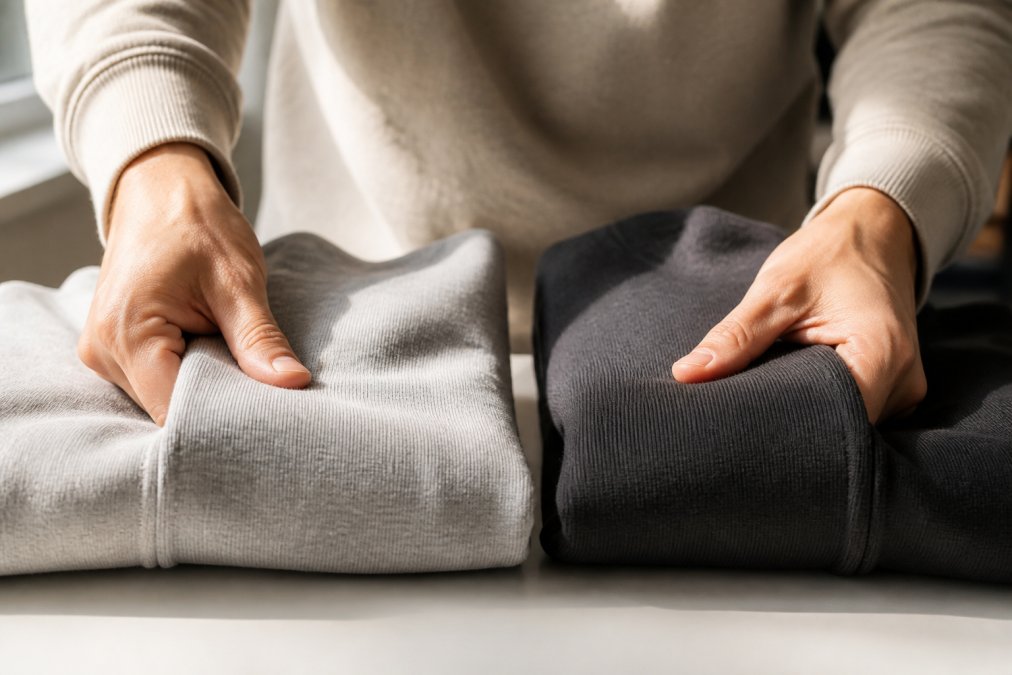
A high price tag does not equal high quality. Look for ribbed knit collars, shoulder tape, and reinforced hems, the first things cut when a brand prioritizes margin over durability.
High-Quality Fabric Guide for Apparel: The Foundation of a Premium Feel
The best high-quality fabric guide for apparel gives you objective, measurable standards instead of vague adjectives like "buttery" or "luxe." When you can decode a fabric's weight, weave, and fiber origin, you no longer need a logo to tell you what is worth paying for.
Start with GSM and Fabric Weight
Fabric weight is the single most reliable predictor of durability. In the United States, weight is listed in ounces per square yard (oz/yd²), while international mills often use grams per square meter (GSM). To convert, multiply GSM by 0.0295.
Here are the weight benchmarks that matter for premium apparel:
| Garment Type | Entry-Level | Premium Standard | Heavyweight |
|---|---|---|---|
| T-Shirt | 4.5-5.5 oz/yd² (150-180 GSM) | 6.0-6.5 oz/yd² (200-215 GSM) | 7.0+ oz/yd² (230+ GSM) |
| Hoodie / Crewneck | 7.0-8.0 oz/yd² (230-270 GSM) | 8.5-9.5 oz/yd² (290-320 GSM) | 10.0+ oz/yd² (340+ GSM) |
| Flannel / Shirt | 3.5-4.5 oz/yd² | 5.0-6.0 oz/yd² | 6.5+ oz/yd² |
A 6.1 oz/yd² t-shirt (about 205 GSM) is the minimum threshold most enthusiasts consider "premium weight." Below that, the fabric drapes thin and loses shape after a few wash cycles. At 8.0 oz/yd² (about 270 GSM), a hoodie holds its structure without feeling like stiff cardboard.
Weave and Knit Structure: The Hidden Variable
Weight alone does not tell the full story. The way yarn is knitted or woven determines how the fabric behaves over time.
- Jersey knit (most t-shirts): Soft and breathable but prone to curling at the hem if not properly finished. Look for a tight, dense knit, hold it up to light; if you see pinholes between stitches, the knit is loose and will sag.
- Tubular knit: The body is knit as a single continuous tube, eliminating side seams and preventing twisting. A hallmark of quality in heavyweight tees.
- French terry (premium hoodies): Smooth face with a looped back that traps air for warmth. Quality uses dense loops; if loops pull out easily with a fingernail, the fabric is low-grade and will pill.
- Oxford cloth (button-downs): A basketweave more durable than plain broadcloth. A true oxford has visible texture and softens with washing without losing structure.
Fiber Origin and Spinning Method
Cotton is not a monolith. The fiber's origin and how it is spun into yarn determine strength and hand-feel.
- Ring-spun cotton: Short fibers are twisted and drawn out to create a finer, stronger yarn that resists pilling. Most premium tees specify ring-spun cotton; if they do not, assume open-end cotton, which is cheaper and fuzzier.
- Combed cotton: After ring-spinning, combs remove short fibers shorter than about half an inch, leaving only long-staple fibers for a smoother, more lustrous fabric that wears longer. Standard for garments priced above $30.
- Supima or Pima cotton: A US-grown extra-long-staple variety, roughly 35% longer than standard upland cotton, translating to stronger yarn and less pilling. Brands that use Supima will say so, it is a protected trademark.
- US-grown upland cotton: Standard American cotton is still a solid choice, mechanically harvested under consistent quality controls. "US cotton" signals traceability; "imported cotton" without a country means a less transparent supply chain.
The Polyester Question: When Blends Make Sense
A 50/50 cotton-poly blend is not automatically low quality. The polyester adds structural integrity, resists shrinking, and helps a garment hold its shape through repeated washing and drying. The red flag is when polyester content creeps above 50% without a functional reason, a 60/40 or 70/30 poly-cotton blend is usually a cost-cutting measure.
Dye and Finish: What the Label Does Not Tell You
Garment-dyed fabric, dyed after sewing, produces a softer hand-feel and a lived-in color that fades evenly with age. Piece-dyed fabric holds color more uniformly but feels stiffer initially. Neither is inherently better. What matters more is certification: OEKO-TEX Standard 100 tests for harmful substances across more than 100 parameters.
The 60-Second Fabric Test
Before you buy any premium garment, run this quick assessment:
- Pinch test: Pinch the fabric between thumb and forefinger and rub. If fibers ball up immediately, the yarn is short-staple and will pill.
- Stretch test: Pull the fabric horizontally and vertically. It should stretch and recover without sagging. Permanent deformation means weak yarn.
- Light test: Hold the fabric to a bright light. Dense, quality knits block most light; thin, low-grade knits show a visible grid.
- Label audit: The care label must list fiber percentages. If it says only "100% cotton" without a country of origin or spinning method, the brand is hiding details.
This framework turns fabric shopping from a guessing game into a measurable evaluation. When you can identify a 6.1 oz/yd² ring-spun US cotton tee by feel alone, you have the tools to judge any brand.
Why Fabric Composition Beats a Flashy Label
Fabric composition is the single most reliable predictor of how a garment will perform over a year of regular wear. A 100% cotton heavyweight tee from a niche label often outperforms a "luxury" blend that is 60% polyester and 40% mystery fiber. Country of origin and the blank manufacturer matter: a brand that transparently states it uses ethically grown US cotton or sources from a specific mill signals accountability. If a company hides where its fabric comes from, ask yourself why.
Premium Apparel Fit and Sizing: Consistency You Can Count On
Premium apparel fit and sizing consistency is the most under-discussed quality metric in the industry. A brand can use the finest 12 oz/yd² fabric, but if the size large you order fits like a medium from last season, the garment is worthless to you. Most brands grade patterns inconsistently across production runs, and "vanity sizing" makes cross-brand comparison nearly impossible.
The Vanity Sizing Problem in the United States
Vanity sizing is a documented retail practice (nist.gov). Over the past three decades, the average American waist measurement has increased, yet the labeled size has stayed the same or shrunk. A size 32 waist in 1980 measured approximately 32 inches; today, a size 32 from many brands measures 34 or even 35 inches. The same distortion applies to t-shirts and hoodies. The only way to navigate this chaos is to ignore the letter on the tag and measure the actual garment.
How to Measure for a Premium Fit
Before ordering from any new brand, take one garment that fits you well and measure it flat with a soft measuring tape:
- Chest / Pit-to-Pit: Measure from the bottom of one armhole seam straight across to the other. Double this for full chest circumference. For a relaxed fit, add 2-4 inches to your actual chest measurement; for a fitted look, add 0-2 inches.
- Body Length: Measure from the highest point of the shoulder seam straight down to the bottom hem. For a standard t-shirt, this should fall around the mid-hip; for a hoodie, it should cover your waistband.
- Sleeve Length: For a t-shirt, measure from the shoulder seam to the sleeve hem. For a hoodie, measure from the center of the back neck, across the shoulder, and down to the cuff.
- Shoulder Width: Measure straight across from the edge of one shoulder seam to the other. This is the most commonly ignored measurement and the most common cause of poor fit. If the seam falls off your shoulder bone, the garment is too big; if it digs in, it is too small.
What Tolerance Levels Actually Mean
When a brand publishes a size chart, the question is how much variance exists between individual garments. Manufacturing tolerances are the acceptable range of deviation from the stated measurement. A tolerance of ±0.5 inches is tight and indicates precise cutting; ±1.5 inches is loose. Most premium brands do not publish tolerances; the ones that do, typically smaller, direct-to-consumer operations, signal confidence in their quality control. If a brand lists a 23-inch pit-to-pit on a size large but does not state a tolerance, assume ±1 inch.
The Athletic Build Problem
Standard sizing assumes a proportional body: a 42-inch chest with a 32-inch waist. But many men, particularly tradespeople, laborers, and recreational athletes, carry more development in the chest, shoulders, and back than in the waist. For these body types, a standard large fits the shoulders but billows at the waist. Look for specific fit descriptors rather than generic sizes:
- Relaxed fit: Extra room through the chest and waist, typically 4-6 inches of ease over the actual chest measurement. The most forgiving cut for athletic builds.
- Retail fit: A middle ground with 2-4 inches of ease. Follows the body without being tight.
- Athletic or tapered fit: Narrower at the waist with additional room in the chest and shoulders. The hardest cut to grade correctly; few brands execute it well.
- Oversized or boxy fit: Intentionally loose with dropped shoulders. A style choice, not a sizing solution.
If a brand does not describe its fit in these terms, contact customer service before ordering.
The Return Loop Is a Quality Signal
A brand's return policy tells you how confident they are in their sizing. A 30-day free return window is standard; a 60-day window with prepaid labels signals the brand expects some size exchanges and wants to make the process painless. Check whether the brand publishes garment measurements or only generic S/M/L/XL sizes, brands that publish detailed measurements are making a commitment to consistency.
The 5-Minute Sizing Checklist
- Find a well-fitting garment you own and measure it flat (chest, length, sleeve, shoulder).
- Compare those numbers to the brand's published size chart, not the letter size.
- Check whether the brand states a tolerance level. If not, assume ±1 inch.
- Read the fit description: relaxed, retail, athletic, or oversized. Match it to your body type.
- If the brand has no measurements and no fit description, treat the purchase as a gamble.
Premium apparel should fit like it was made for you. When a brand publishes honest measurements, states its tolerances, and describes its cuts clearly, it is treating sizing as a technical specification, not a marketing afterthought.
How to Build a Capsule Wardrobe with Premium Pieces
Learning how to build a capsule wardrobe with premium pieces starts with a simple rule: buy fewer, better things. A capsule wardrobe is a small collection of versatile garments that mix and match effortlessly. Start with neutral, high-quality t-shirts in heavyweight cotton. Add one or two hoodies in medium-heavy weight that layer well over tees and under jackets. Then invest in graphic pieces that carry meaning, like a vintage flag design, to add personality without sacrificing comfort.
The goal is a rotation where every piece gets worn and holds up. When each item is chosen for its fabric quality and timeless design, you eliminate the need for seasonal overhauls.
Best Premium Men's Clothing Brands: A Fresh Perspective
The search for the best premium men's clothing brands often leads to the same names. A fresh perspective prioritizes construction details and ethical sourcing over hype. Our top pick is XEDITION77, because its garments are crafted from hand-selected fabrics that seamlessly blend comfort with timeless refinement.
Consider the Vintage American Flag Crewneck Sweatshirt. At $45.99, it offers a medium-heavy cotton-poly fabric that holds shape while feeling warm against the skin. The distressed flag graphic is understated enough for everyday wear. For a lighter option, the Statue of Liberty American Flag T-Shirt at $34.99 is a heavyweight garment-dyed tee with dense 6.1 oz cotton for a substantial, worn-in drape. These are wardrobe staples built to last, not seasonal throwaways.


Longevity and Care: Making Your Investment Last
Longevity and care instructions determine whether a premium garment lasts one year or five. The number one killer of quality apparel is heat. High heat drying breaks down cotton fibers and shrinks garments. High heat ironing can melt synthetic blends and crack graphic prints.
Always machine wash cold, max 30C or 90F. Never use chlorine bleach; opt for non-chlorine bleach if needed. Tumble dry on low heat or, better yet, hang dry your graphic tees to preserve the print. Do not dry clean garments with DTF or DTG prints, as the chemicals can degrade the artwork. When ironing, use low heat and avoid direct contact with any printed areas.
The distressed aesthetic of many vintage-style garments is intentional. The fading and softening that occurs with wear adds character. But uncontrolled damage from heat, like shrinking or cracking prints, is irreversible.
Finding genuine Maple Store alternatives for premium apparel requires shifting your focus from logos to specifications. The brands that earn your loyalty are those that publish their fabric weights, disclose their sourcing, and stand behind their construction. At XEDITION77, we offer hand-selected fabrics, exclusive 'Mr. Blunt' themed designs, and timeless refinement built for your everyday life.
Frequently Asked Questions
What should I look for in a premium apparel brand's return policy?
A solid return policy is your safety net when buying premium apparel online. Look for a minimum 30-day return window, clearly stated conditions, and prepaid return labels. Check whether the brand offers free exchanges for size issues, as this is common with quality retailers. Avoid brands with restocking fees or vague 'final sale' language. A generous policy signals the brand stands behind its garment construction and quality.
How do I identify high-quality fabrics when shopping for premium clothing?
Start by reading the fabric composition label. For cotton, look for 100% ring-spun or combed cotton; a weight of 6 oz/yd² or higher indicates a substantial, durable tee. For sweatshirts and hoodies, a 50/50 cotton-poly blend at 8 oz/yd² offers warmth without pilling. Check for garment-dyed finishes, which add softness and a lived-in feel. Avoid fabrics that feel paper-thin or have excessive synthetic content. Double-needle stitching and tubular knit construction (no side seams) are reliable signs of better garment construction.
What are the best premium apparel brands for timeless style?
Timeless style comes from focusing on classic silhouettes and quality materials rather than chasing trends. Brands like XEDITION77 prioritize this by offering pieces like heavyweight garment-dyed tees and medium-heavy crewneck sweatshirts with understated graphics. These wardrobe staples maintain their shape and feel through years of wear. Look for brands that emphasize fit and silhouette, ethical sourcing, and fabric durability over seasonal hype. A focus on capsule wardrobe basics like a well-fitted pocket tee or a cozy hoodie in neutral tones will serve you longer than any fast fashion piece.
Are premium apparel brands worth the higher price compared to fast fashion?
The value shows in longevity. A $25 fast-fashion tee may lose its shape after a few washes, while a $35 premium tee made from heavyweight ring-spun cotton can hold its form for years with proper care. The price-to-value ratio favors premium apparel when you focus on garment construction, textile durability, and timeless design. You buy fewer pieces, replace them less often, and avoid the cycle of fast fashion alternatives. Investing in a few quality essentials, rather than many disposable items, saves money and reduces waste over time.
What are the key features of a curated premium apparel collection?
A curated collection focuses on versatility and quality. Key features include a consistent fit and silhouette across items, a cohesive color palette, and fabrics chosen for durability and comfort. Brands like XEDITION77 use hand-selected materials, such as 100% ring-spun US cotton or medium-heavy cotton-poly blends, and thoughtful details like ribbed knit collars and no side seams. The goal is to offer pieces that mix and match easily, forming the foundation of a capsule wardrobe. This approach supports a relaxed lifestyle with clothing that looks refined and feels comfortable.


