


Table of Contents
- Start With Your Closet and a Wish List
- How to Measure Yourself for Clothes Before You Buy
- Understanding Clothing Fabric Quality From a Product Page
- Reading Size Charts, Reviews, and Brand Reputation
- How to Return Online Clothing Without Losing Money
- Virtual Try-On and Fit Tools: What They Actually Solve
- Caring for Your Clothes After They Arrive
- Final Tips for Buying Clothes Online
- Frequently Asked Questions
Last Updated: September 12, 2026
Start With Your Closet and a Wish List
The best tips for buying clothes online start before you open a tab: audit your closet, then build a wish list around what you actually wear.
According to Printful's 2026 fashion e-commerce statistics, the global average order value for online apparel sits near $123, real money spent on garments many people never wear twice. At XEDITION77, we hear the same frustration: closets full of pieces that seemed essential at checkout and turned out to be strangers by the second wash.
Pull everything you wore in the past two weeks, that pile is your actual wardrobe; the rest is storage. Note the colors, fabrics, and silhouettes you keep reaching for, then photograph the pile for reference.
Your wish list works best as a living document, not a graveyard of impulse saves:
- List the specific gaps (a heavyweight tee, a layering piece for cool evenings)
- Note your measurements before browsing, not after
- Save items for 48 hours before buying
- Compare price and fabric weight, not just the photo
- Check the return window on every item you save
That discipline sets up everything else. Next: get your numbers right, because fit is where most online orders go wrong.
How to Measure Yourself for Clothes Before You Buy
Learning how to measure yourself for clothes takes five minutes and one soft tape. Measure your chest at the fullest point, your natural waist, and your hips at the widest point, then write the numbers down.
Do it over a fitted shirt, keep the tape level, and stand relaxed. Two measurements matter most: chest and length. A garment that fits the chest but runs short sits wrong all day. Check the listed body length against a shirt you already own and trust.
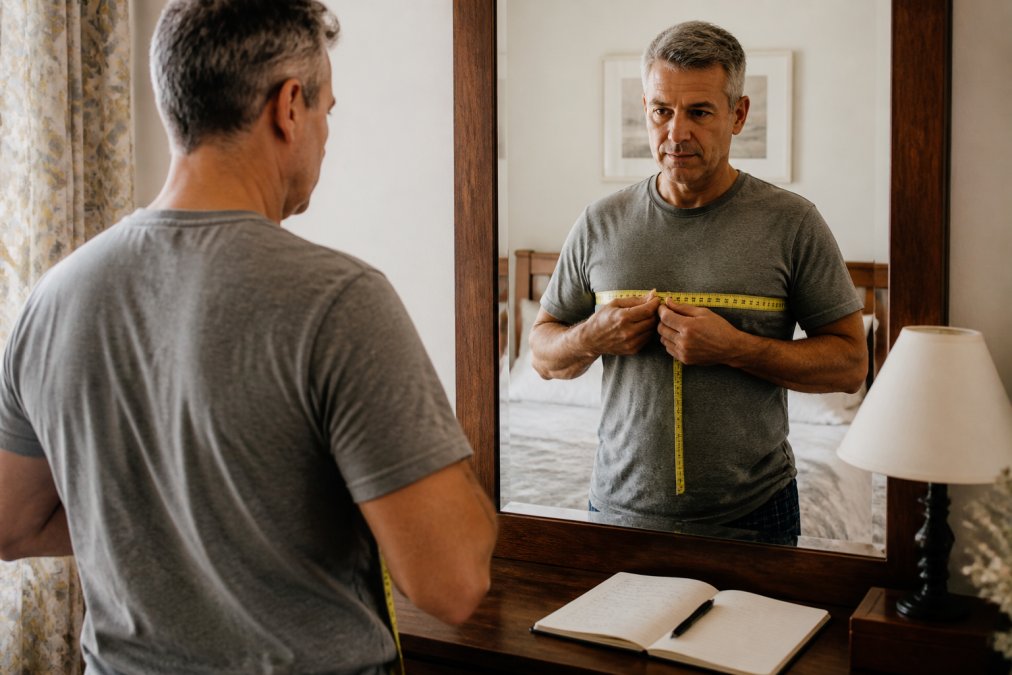
Repeat every six months, bodies shift, and a two-year-old measurement is a guess. If you lift, work outdoors, or split time between climates, measure again before a seasonal order.
Turning Your Numbers Into a Size Decision
Measurements only pay off if you know how to use them. The workflow is a three-step comparison:
- Write your body measurements in inches (chest, waist, hip, and the length of a shirt you already like).
- Find the chart's "garment measurements" column, not the "body measurements" column. Garment measurements describe the flat-laid shirt; body measurements describe the person it is cut for.
- Add the ease. A relaxed-fit tee lists a chest measurement two to four inches larger than your body chest; a slim-fit tee may list only one to two inches. If the chart does not state the fit type, assume the smaller ease and size up if you are between sizes.
Shoppers often order their usual letter size, ignore the flat measurement, then blame the brand when the shirt runs short. The flat measurement is the only number that travels with the garment.
Cross-Border Sizing: The Conversion Problem Most Guides Skip
If a label publishes its chart in centimeters or follows a different national convention, the letter on the tag can mislead. A men's medium in one convention is not the same chest measurement as another, and women's numeric sizing varies even more.
The fix: stop shopping by letter and shop by centimeter or inch. Convert the chart to your unit, compare it to your measurement plus the ease you want, and ignore the size label. A notes app entry with your chest, waist, hip, and preferred shirt length in both units saves the conversion every time.
Second habit: save the size you ordered and how it fit. After three or four orders, you have a personal conversion table that beats any brand's chart.
Understanding Clothing Fabric Quality From a Product Page
Understanding clothing fabric quality comes down to three lines on the product page: fiber composition, fabric weight, and construction details. Read those before the model photo.
Fabric composition tells you how the garment behaves. Natural fibers like cotton, linen, and wool breathe and soften with wear. Synthetics such as polyester and elastane add stretch and shape retention but trap heat and pill. Blends are not automatically worse; a little elastane in a cotton tee keeps the collar from stretching out.
Weight matters too. A 6.1 oz cotton tee has a substantial, worn-in drape; a 4 oz shirt feels thin and shows every crease. Heavier fabric holds its shape longer, which is why garment-dyed heavyweight cotton ages so well.
Then check construction: double-stitched hems, taped neck seams, and reinforced shoulder seams signal quality control. A description listing fabric weight, dye method, and fit is written by a seller who knows the garment.
According to UX Planet's 2026 analysis of online returns, roughly 40% of online clothing purchases come back, driven mainly by sizing and fit rather than defects. Fabric detail on the page is one of the few things that reduces that number before the order ships.
Reading Size Charts, Reviews, and Brand Reputation
Size charts, customer reviews, and brand reputation form a three-part filter that catches most bad purchases before checkout. Use all three, in that order.
Start with the size chart and compare it against your measurements, not your usual size. Vanity sizing varies wildly, and your "large" in one label is a medium in another. A chart listing garment measurements rather than body measurements is a good sign, it tells you how the shirt measures flat.
Reviews come next, and the useful ones are not the five-star raves. Sort by lowest rating first, look for repeated complaints about shrinkage, fading, or sizing discrepancies, and note whether the seller responds. A brand that answers negative reviews stands behind its inventory.
Brand reputation is the slowest signal to build and the most reliable. Established labels publish fit guides, list fabric composition, and keep sizing consistent across seasons. That is why XEDITION77 builds each piece from hand-selected fabrics and publishes the weight and dye method on the product page, so you can compare against what you own.
A 2026 study in the Journal of Advances in Agriculture and Rural Research found that customer awareness of an online shopping platform directly influences purchasing behavior for fashion products. In plain terms: the more you know about who made the garment and how, the better your order turns out.
| Signal | What to Check | Red Flag |
|---|---|---|
| Size chart | Garment measurements vs. body measurements | No chart, or "fits true to size" only |
| Reviews | Lowest ratings first, repeated complaints | No reviews under 4 stars |
| Brand reputation | Consistent sizing across seasons | Sizing changes between drops |
| Product page | Fiber composition, fabric weight, care | Vague "premium cotton" claims |
How to Return Online Clothing Without Losing Money
Knowing how to return online clothing without losing money means reading the return policy before you buy. The window, the restocking fee, and who pays return shipping decide whether a return is free or expensive.
Most policies hide their real cost in three places: the return window (14 days from delivery, or 30 to 60), the restocking fee (a percentage off your refund on certain categories), and return shipping, often deducted from the refund even when the policy sounds generous.
A few habits keep returns cheap:
- Screenshot the return policy at checkout, since terms change
- Keep original packaging until you have worn and washed the item once
- Start the return the day you decide, not the day before the deadline
- Use the carrier the retailer specifies to avoid rejected claims
- Track the return shipment and keep the receipt
One caveat: returns are not a substitute for measuring. Each return costs the retailer shipping and processing, and those costs show up in prices. Getting the fit right the first time is cheaper for everyone.
Virtual Try-On and Fit Tools: What They Actually Solve
Virtual try-on tools solve visualization, not fit. They show how a color or silhouette reads on a similar body type, but cannot tell you whether a garment fits your shoulders. Fit predictors and size charts have been standard for years and the return rate has not collapsed, seeing a shirt on a model does not tell you how it drapes after three washes.
That said, the current generation is more useful than the 2019-era AR gimmicks most guides describe. Here is what each category does, and where it earns its place.
The Four Categories of Modern Fit Tools
- AI size recommenders. These take your height, weight, and a few measurements, then compare them against the brand's return data to suggest a size. They are only as good as that data set, so they work best on large retailers and poorly on small labels.
- Body-scan apps. You stand in front of your phone camera and the app estimates measurements from a silhouette. Convenient, but accuracy varies with lighting, clothing, and posture. Treat the output as a starting point and verify with your tape measure.
- Virtual try-on (VTO) rendering. You upload a photo and the tool drapes the garment over your image. Useful for color and silhouette, weak on drape and fabric behavior. A rendered tee will not show you how a 6.1 oz cotton falls versus a 4 oz one.
- Fit-predictor overlays on product pages. These compare the garment's flat measurements against a size you already bought from the same brand. The most reliable category, because it uses your own purchase history as the baseline.
How to Use Them Without Getting Burned
A practical order of operations:
- Start with your tape measurements, not the tool. The tool is a second opinion.
- If the brand offers a fit predictor tied to your past orders, use it first, it has the most relevant data.
- Use VTO rendering only to rule out colors and silhouettes you would not wear, not to confirm size.
- If the AI recommender and your measurements disagree, trust your measurements. The algorithm is optimizing for the average customer, not for you.
- Screenshot the recommended size before checkout. If the order is wrong, the screenshot is your evidence when you contact support.
Where These Tools Still Fail
Three failure modes recur. Tools trained on a brand's return data inherit its vanity sizing, so a "medium" recommendation may still run small. Body-scan apps struggle with anyone outside the average build they were trained on. And VTO rendering rarely accounts for shrinkage, so a garment that looks right on screen may fit differently after the first cold wash.
Personalization features like these are increasingly used by online fashion retailers to retain customers and build loyalty, according to Visualmodo's 2026 fashion e-commerce trend report. The takeaway is not to avoid them, but to treat them as one input among several.
For sizing, your tape measure still beats the algorithm. Use the tool for style, use your measurements for fit, and treat any "recommended size" as a starting point rather than an answer.
Caring for Your Clothes After They Arrive
Garment care is the difference between a shirt that lasts three years and one that fades by August. The care label is the manufacturer telling you exactly what the fabric tolerates.
Three rules cover most garments. Wash cold, because heat shrinks cotton and sets stains. Turn graphic tees inside out before washing to protect the print from abrasion. And dry on low or hang to dry, since the dryer is the single biggest cause of shrinkage and pilling.
Garment-dyed and heavyweight cotton need a gentler start. Wash them alone the first time; some dye release is normal in dyed-after-construction fabrics. After that, the color settles into the muted, broken-in tone the garment was designed to reach.
Store knits folded rather than hung, since hangers stretch shoulders. Rotate your wardrobe so nothing sits unworn for a season, and repair small issues like loose buttons before they become reasons to replace the piece.
Final Tips for Buying Clothes Online
The tips that matter most are the boring ones: measure before you browse, read the fabric weight, check the return window, and care for what you buy. Doing those four things consistently beats any app or algorithm.
A few final habits: buy from brands that publish real garment measurements and stand behind their sizing. Build a wish list instead of impulse-buying, and let items sit two days before checkout. Track what you actually wear, and let that record guide the next order rather than a sale banner.
The numbers back this up. Capital One Shopping reports 2.82 billion people now shop online, and Bizrate Insights found 63% of back-to-school shoppers expect to buy through online channels. With that much volume, the difference between a wardrobe you love and a drawer of regrets is preparation, not luck.
XEDITION77 builds for exactly that kind of buyer: heavyweight garment-dyed cotton, hand-selected fabrics, and sizing published in detail so you can order once and wear it for years. Browse the MR.Blunt American Flag Muscle Car Tee at $44.00, the Xedition 77 Vintage Flag Tee at $26.58, or the Statue of Liberty Vintage Flag T-Shirt at $34.99, and see what a product page with real fabric detail looks like.


Frequently Asked Questions
How can I make sure I get the right fit when buying clothes online?
Take your own measurements with a soft tape measure and write down chest, waist, hip, and sleeve length. Compare those numbers to the brand's size chart, not to the size you wear in another brand. Check the fit guide for notes on whether a garment runs relaxed or slim. Buy from stores that publish garment measurements in inches, and read reviews from customers with a similar height and build. Getting the numbers right before checkout is the single biggest factor in avoiding a return.
What should I look for in an online clothing return policy?
Look for the return window, who pays return shipping, and whether restocking fees apply. Many stores give 30 days from delivery, but some start the clock at the ship date. Check whether the item must be unworn with tags attached. A prepaid return label costs you nothing extra; a store that deducts shipping from your refund is a different deal. Save your order confirmation and tracking number in case you need to prove the delivery date.
How do I judge clothing fabric quality when I can't touch it?
Read the fabric composition on the product description, not just the marketing copy. Natural fibers like cotton, linen, and wool breathe and hold up well; synthetic fibers like polyester and acrylic can pill or trap heat. Look for fabric weight when it's listed, since a 6.1 oz cotton tee feels noticeably more substantial than a thin 4 oz one. Garment-dyed and pre-washed fabrics tend to keep their shape and color after repeated washing.
What is the 3-3-3 rule for clothes?
The 3-3-3 rule is a packing and wardrobe guideline: three tops, three bottoms, and three pairs of shoes can cover a short trip or form a small capsule. The idea is that nine well-chosen pieces mix into enough outfits for several days. It works as a buying filter too. If a new item won't pair with at least three things you already own, it's more likely to sit unworn in the closet.
Online clothing still carries a fit risk that no size chart fully removes, and the 40% return rate proves it. XEDITION77 narrows that gap with hand-selected fabrics, heavyweight garment-dyed cotton, and full measurements published on every product page, so you can compare against the shirts already in your closet. Shop the latest arrivals and build a wardrobe that fits the first time.


