October 02, 2026
How to Tell if Men's Clothing Uses Quality Fabric Online
Table of Contents
- Why You Can't Feel Fabric Online, But You Can Still Spot Quality
- How to Read Clothing Labels Online for Fiber Composition
- Best Fabric Types for Men's Shirts and What They Mean
- Evaluate Stitching and Construction From Product Photos
- Recognize Quality Certifications and Supply Chain Transparency
- Use Returns and Warranty as a Quality Proxy
- Red Flags: Price, Marketing Claims, and What to Ignore
- Frequently Asked Questions
Last Updated: October 2, 2026
Why You Can't Feel Fabric Online, But You Can Still Spot Quality
Buying men's clothing online means you can't run your hands over the fabric before checkout. That's a real problem. According to Baymard Institute's apparel UX research, 90% of apparel websites fail to give customers the tools to properly assess fit, appearance, and fabric quality before purchase.
But here's what matters: you don't need to touch the fabric to spot quality. XEDITION77 and other serious brands know this. They show you what matters. The trick is knowing what to look for, fiber content, construction details, certifications, and honest return policies all tell you whether a garment will hold up or fall apart after three washes.
This guide walks you through the exact signals that separate high-quality fabric men's clothing from fast fashion. You'll learn how to read labels like a pro, spot construction flaws in product photos, and use returns as a quality proxy when you're unsure.
How to Read Clothing Labels Online for Fiber Composition
The fiber content label is your first line of defense.
Start here: look for the fiber percentage breakdown. A label reading "100% cotton" is straightforward. A label reading "65% cotton, 35% polyester" tells a different story.
Natural fibers like cotton, linen, and wool are increasingly cited as primary indicators of durability compared to synthetic alternatives, according to Ethos Concept's fiber analysis.
Understanding Fiber Percentages and Natural vs. Synthetic Blends
A 100% cotton shirt breathes better and feels softer than a synthetic blend. But it also shrinks more and wrinkles faster.
Here's the practical reality: blends aren't bad. They're trade-offs. A 60% cotton, 40% polyester work shirt holds its shape through a full day of labor.
Watch out for vague labels. "Cotton blend" without percentages is a red flag. Serious brands specify exactly what you're getting.
What Long-Staple Cotton and Mercerized Cotton Tell You
Long-staple cotton comes from longer fibers. Longer fibers mean softer fabric and better durability. Pima cotton and Egyptian cotton are both long-staple varieties.
Mercerized cotton has been treated with alkali to increase luster and strength. It holds dyes better and resists shrinkage. When you see "mercerized cotton" on a label, the brand invested in an extra processing step. That costs money.
Budget brands skip these details. Premium brands highlight them.
Best Fabric Types for Men's Shirts and What They Mean
Different fabrics serve different purposes. A beach shirt needs different properties than a work shirt. Knowing what to expect from each type prevents disappointment.
Ring-Spun Cotton: Durability and Hand-Feel
Ring-spun cotton is twisted during spinning to create a tighter, stronger yarn. The result is softer fabric that resists pilling and lasts longer than standard cotton.
XEDITION77's Rick's Crabs T-Shirt uses 100% ring-spun US cotton in a heavyweight 6.1 oz fabric. That specification tells you the shirt will feel substantial in your hands and maintain its shape wash after wash. The tubular knit construction (no side seams) and double-needle stitching add longevity.

Ring-spun cotton costs more to produce, which is why serious makers of high-quality fabric men's clothing prioritize it for durability.
Fabric Weight and GSM: Why Heavier Isn't Always Better
Fabric weight is measured in ounces per square yard or GSM (grams per square meter). A 5.5 oz t-shirt feels light and breathable. A 6.1 oz shirt feels substantial.
Heavier fabric doesn't always mean better quality. It depends on what you're wearing it for.
Check the product description for the weight. If it's missing, ask. A brand that knows its fabric will tell you.
Evaluate Stitching and Construction From Product Photos
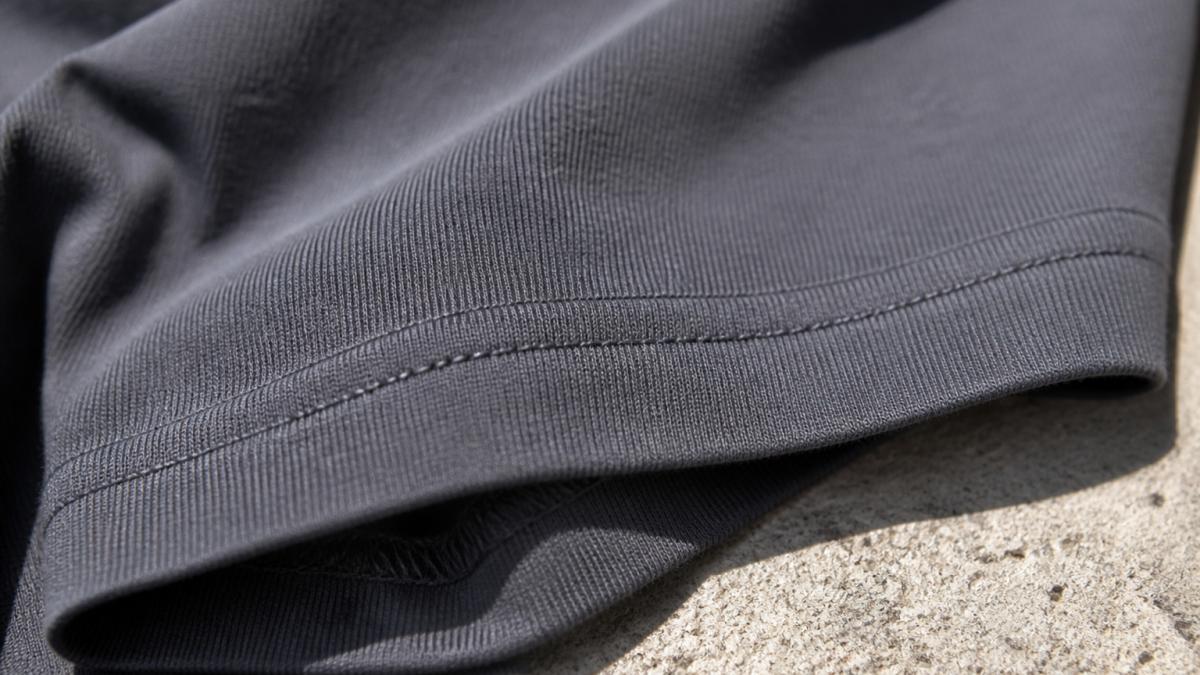
You can't touch fabric online, but you can see how it's sewn. Stitching quality reveals whether a garment will last, if you know what to look for and how to examine the images properly.
Using Macro-Photography and Zoom Techniques
Most product photos are taken at a distance. To evaluate stitching, you need to zoom in. Here's how:
- Right-click on the product image and select "Open image in new tab" or "View image." This gives you the full-resolution version, not the compressed version displayed on the website.
- Use your browser's zoom function (Ctrl + or Cmd + on Mac) to magnify the image to 200-300%. Look for seams, hems, and collar edges.
- Focus on high-stress areas: armholes, shoulder seams, side seams, and hem lines. These areas take the most wear.
- If the brand offers multiple product photos, examine every angle. Quality brands provide close-up shots specifically for this reason. If all photos are distant lifestyle shots, the brand is hiding something.
Many quality brands now include macro-photography or close-up detail shots in their product galleries. If you see a photo labeled "Detail" or "Close-up," that's your opportunity to inspect stitching directly.
What High-Quality Stitching Looks Like
When you zoom in, look for these markers of quality:
Straight, Even Stitches: The thread line should be perfectly straight with consistent spacing. Wavy or uneven stitches indicate rushed production or a poorly-maintained sewing machine.
Tight Tension: The thread should pull the fabric together firmly without puckering (gathering) or creating visible gaps.
Consistent Stitch Length: Count the stitches in a one-inch section. Quality garments have 12-16 stitches per inch.
Rick's Crabs T‑Shirt With Mr.Blunt way of life Coastal Seafood Shack Graphic →
No Loose Threads: Examine the edges of seams. Loose threads hanging off the seam indicate the garment wasn't finished properly.
No Puckering or Bunching: The fabric on either side of the seam should lie flat.
Double-Needle Stitching and Tubular Knit Construction
Double-needle stitching runs two parallel lines of thread instead of one. It's visually distinctive and significantly stronger.
Double-needle stitching is most visible on t-shirt hems and armholes. If a brand uses it, they'll often highlight it in the product description because it's a quality signal.
Tubular knit construction means the shirt is knitted as a tube, then cut and sewn. This eliminates side seams entirely.
Red Flags in Product Photos
If you zoom in and see any of these, the garment is likely low-quality:
- Visible loose threads hanging from seams or hems
- Uneven or wavy stitching that doesn't follow a straight line
- Puckering or bunching around seams
- Visible gaps between the thread and fabric (sign of loose tension)
- Fraying edges on hems or seams that haven't been finished
- Misaligned seams where two pieces of fabric don't meet evenly
When Product Photos Aren't Detailed Enough
Some brands don't provide close-up photos. In these cases, use the brand's return policy as a backup quality indicator. A 60+ day return window gives you time to inspect the garment in person and return it if the stitching is poor.
You can also check customer reviews on the brand's website or third-party review platforms. Search for keywords like "stitching," "seams," or "durability." If multiple customers mention loose threads or seams coming apart, that's a clear quality problem.
Recognize Quality Certifications and Supply Chain Transparency
Certifications matter because they're verified by third parties. A brand can claim anything. A certification proves it.
OEKO-TEX certification means the fabric has been tested for harmful substances. It doesn't guarantee durability, but it signals that the brand cares about safety and quality control.
Look for transparency about production. Where is the garment made? What are the working conditions? Consumers are shifting toward brands that provide clear information regarding their production processes and sustainability standards, according to Project Cece's sustainability research.
A brand that hides its supply chain is hiding something.
Use Returns and Warranty as a Quality Proxy
A strong return policy is a quality signal. Brands confident in their products stand behind them.
Check the return window. 30 days is standard. 60 days or longer signals confidence.
If a brand makes returns difficult or charges restocking fees, they're protecting themselves from complaints. That's a red flag.
Warranty length matters too. A 1-year warranty is basic. A 2-year warranty means the brand expects the garment to perform for years, not months.
Red Flags: Price, Marketing Claims, and What to Ignore
Price is not always a reliable indicator of quality. A price that seems too good to be true is a warning sign, but high pricing does not automatically guarantee superior fabric quality or construction, according to industry analysis.
Watch for vague marketing language. "Premium," "luxury," and "finest" mean nothing without specifics. "100% ring-spun US cotton with double-needle stitching" means something.
Ignore the hype. Focus on fiber content, construction details, and certifications. Those are the signals that matter.
Fast fashion brands use the same buzzwords as quality brands. The difference is in the details. A fast fashion brand might use 100% cotton but skip the ring-spun processing and use single-needle stitching.
Frequently Asked Questions
What are the best fabrics for men's clothing?
Ring-spun cotton, long-staple cotton, and mercerized cotton rank highest for durability and comfort in men's apparel. Ring-spun cotton is twisted tighter during production, creating stronger fibers that resist pilling and wear. Look for 100% cotton or cotton-dominant blends (85% cotton or higher) when shopping for high-quality fabric. Heavyweight fabrics—typically 6.0 oz or above—signal better durability than lightweight alternatives. Avoid fast-fashion blends under 50% natural fiber content, as they break down faster and lose shape quickly.
How can you tell the quality of a shirt by looking at the fabric online?
Start with the fiber label: look for 100% ring-spun cotton or long-staple cotton, and check the fabric weight in ounces or GSM (grams per square meter). In product photos, examine stitching closely—double-needle seams and tight, even stitch lines indicate quality construction. Look for high-resolution images showing the weave pattern and texture; poor-quality fabric appears thin or loose-woven. Check whether the brand provides specific details like 'garment-dyed' or 'pre-shrunk,' which signal attention to finishing techniques. Finally, review the return policy and warranty; brands confident in fabric quality offer generous returns and durability guarantees.
Does a higher price tag always mean better fabric quality?
No. Price is not a reliable indicator of quality on its own. According to industry research, high pricing does not automatically guarantee superior fabric quality or construction. Instead, focus on verifiable specifications: fiber type, weight, stitching method, and certifications. A $26 shirt made from 6.1 oz ring-spun cotton with double-needle stitching may outperform a $60 shirt made from thin synthetic blends. Always cross-check the product description and label data before assuming premium pricing reflects premium materials.
What should I look for in product descriptions to assess fabric quality?
Search for these specific details: fiber composition (100% cotton or named natural fibers), fabric weight in ounces or GSM, construction methods (double-needle stitching, tubular knit, garment-dyed), and finishing techniques (pre-shrunk, mercerized). Look for transparency about manufacturing origin and any quality certifications like OEKO-TEX. Avoid vague marketing language like 'premium' or 'luxury' without supporting specifications. Brands that invest in detailed fabric descriptions—including care instructions, shrinkage expectations, and durability claims—typically stand behind their products with better returns policies and warranties.
Buying quality men's clothing online is possible, if you know what to look for. Fiber composition, construction details, certifications, and return policies all point toward brands that will last. XEDITION77 demonstrates this approach with hand-selected fabrics, transparent construction methods, and genuine warranties. Start with the label, zoom in on the seams, check the certifications, and test the return policy. Those steps separate the garments worth wearing from the ones you'll regret.