


Table of Contents
- Why Judging Fabric Quality Online Matters
- Step 1: Check Fiber Content and Material Composition
- Step 2: Understand Fabric Weight and GSM Explained
- Step 3: Evaluate Weave and Knit Structure
- Step 4: How to Read Clothing Material Labels
- Step 5: Analyze Product Descriptions and Visual Cues
- Signs of Poor Quality Clothing to Avoid
- Step 6: Review User Feedback and Return Policies
- Frequently Asked Questions
Last Updated: September 23, 2026
Why Judging Fabric Quality Online Matters
When you can't touch fabric in person, you're missing one of your best tools for spotting quality. But the truth is, you don't need to feel it to know if it's good. According to research on consumer quality perception from Ohio State University, consumers rely on specific physical and visual cues to judge product quality, and those cues are visible and measurable online.
Most online shoppers don't know what to look for. They see a price tag, read reviews, and hope for the best. Then the shirt arrives, and after three washes, it's pilling, the seams are pulling, and the fabric feels thin and cheap.
At XEDITION77, we've built our collection on hand-selected fabrics. But beyond our own pieces, we want to help you judge fabric quality online no matter where you shop.
Below are seven steps to judge fabric quality online before you buy.
Step 1: Check Fiber Content and Material Composition
Fiber content determines everything. Look for the label on every product page, it should list percentages for each material. A 100% cotton shirt is different from 65% polyester and 35% cotton.
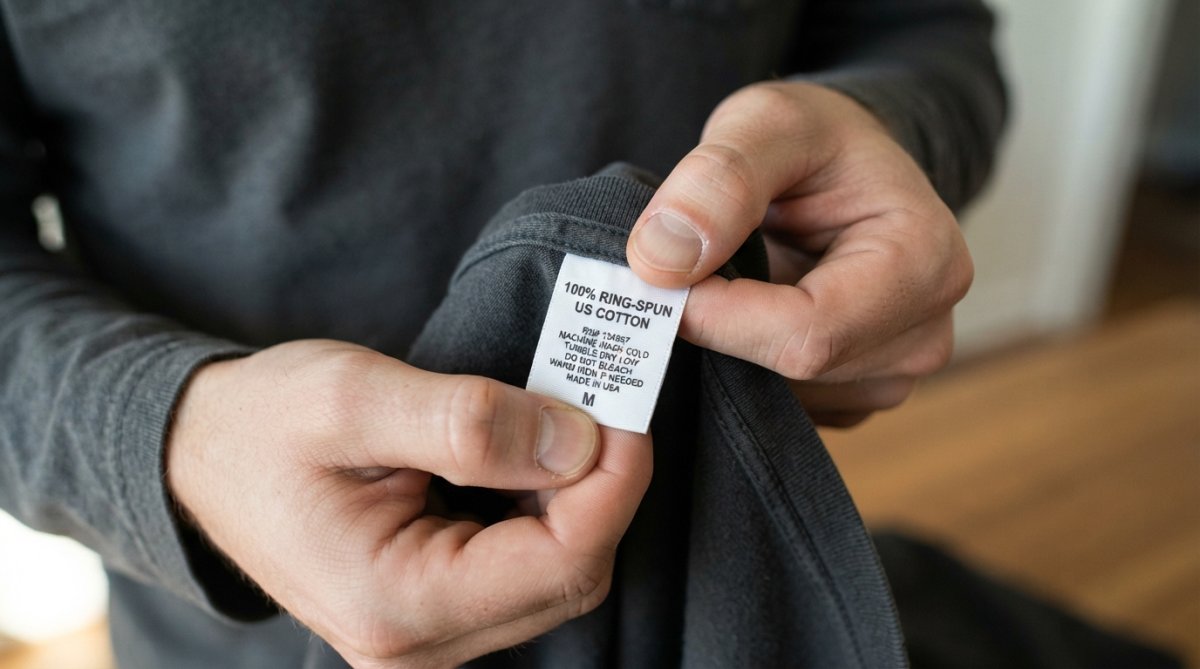
Natural fibers generally outperform synthetics for comfort and durability:
- Cotton breathes well and softens with age
- Wool regulates temperature and resists wrinkles
- Linen is durable and gets softer over time
- Polyester is cheap but pills easily and traps heat
- Nylon is synthetic and loses softness quickly
According to a 2026 Global Lifestyle Monitor survey from Cotton Incorporated, 59% of consumers rated cotton clothing as having the best quality compared to other fibers. That preference exists for a reason, cotton lasts longer and feels better.
Blends vary: 95% cotton with 5% spandex adds stretch without sacrificing breathability, but 60% polyester with 40% cotton is cost-cutting. Check fiber content first, if mostly synthetic, move on.
Step 2: Understand Fabric Weight and GSM Explained
Fabric weight indicates durability. Weight is measured in GSM (grams per square meter): 150 GSM feels thin, 200 GSM feels substantial, 250+ GSM feels premium.
Here's what different weights mean in practice:
Fabric Weight (GSM) |
Feel |
Best For |
Durability |
|---|---|---|---|
100-150 |
Thin, flimsy |
Summer wear only |
Poor |
150-200 |
Light, breathable |
Everyday wear |
Fair |
200-250 |
Substantial, soft |
Quality basics |
Good |
250+ |
Heavy, dense |
Premium pieces |
Excellent |
Look for GSM on the product page, if it's not listed, that's a red flag. The Rick's Crabs T-Shirt uses 6.1 oz fabric (approximately 207 GSM), which holds its shape and softens with washing. Lightweight fabric saves money for manufacturers, not for you.
Step 3: Evaluate Weave and Knit Structure
Construction determines performance. Two fabrics with identical fiber content can feel different based on structure. Online, read construction from photos, zoom tools, and product videos.
Rick's Crabs T‑Shirt With Mr.Blunt way →
Weave (how threads interlock) and knit (how loops form) determine performance. Tight weaves are durable but less breathable; loose weaves breathe better but wear faster. Twill is very durable (work pants); plain weave is versatile. Jersey knit is soft and stretchy (t-shirts); rib knit is elastic (cuffs); pique knit is textured (polos).
Use zoom features to spot weave quality: check for consistent thread spacing (irregular spacing signals poor loom tension), look for unintended knots (quality control problems), examine selvage edges (should be clean and tight), verify consistent thread density across a 1-inch square, and watch for loose fibers (fuzzing indicates pilling risk).
Premium retailers provide video showing fabric movement. Quality fabric drapes smoothly; poor synthetics look plasticky. Natural fibers scatter light evenly; cheap polyester shows shiny, uniform reflection. Quality fabric recovers quickly from creases; cheap fabric stays creased.
What research shows:
According to a 2024 study from the Journal of Engineered Fibers and Fabrics, weave density directly correlates with fabric durability and longevity. Tighter weaves resist pilling and maintain shape better. The study found that fabrics with thread counts above 150 threads per inch showed 40% better resistance to surface wear than those below 100 threads per inch.
Red flags: visible gaps, uneven thread thickness, loose selvage threads, wavy thread lines, or plastic-like shine. Look for "tight weave," "dense knit," or "high thread count" in descriptions. Avoid "loosely woven" or "lightweight knit."
Step 4: How to Read Clothing Material Labels
Beyond fiber content and care instructions, third-party certifications provide objective quality standards that separate marketing claims from verified performance.
A good label lists fiber content, care instructions, country of origin, and certifications. Care instructions signal quality: "machine wash cold, tumble dry low" indicates durable fabric; "hand wash only" or "dry clean only" indicates delicate fabric. Sewn labels (not printed) signal confidence in durability.
Understanding third-party certifications (the objective quality markers):
This is where most online fabric guides fall short. Certifications are the bridge between subjective "feel" and measurable quality. Here are the certifications that actually matter:
OEKO-TEX Standard 100: Tests for harmful chemicals (heavy metals, formaldehyde, pesticides). Certifies the fabric is safe for skin contact and won't off-gas chemicals. Doesn't guarantee durability, but most premium brands list it.
Global Organic Textile Standard (GOTS): Verifies organic fiber grown without synthetic pesticides and that the entire supply chain meets strict environmental and labor standards. GOTS-certified fabrics signal commitment to quality and sustainability.
Fair Trade Certified: Ensures fair wages and safe conditions. While it doesn't measure fabric quality directly, it signals investment in supply chain, which correlates with better quality control.
Rick's Crabs T‑Shirt With Mr.Blunt way →
Bluesign®: Ensures safe chemicals in dyeing and proper wastewater treatment. Reduces dye instability and chemical residues. Look for this on dyed fabrics, especially dark colors.
Cradle to Cradle Certified: Evaluates entire product lifecycle.
How to find certifications online:
- Check the product description for certification logos or mentions.
- Look at the brand's "About" or "Sustainability" page, reputable brands prominently display their certifications.
- If certifications aren't mentioned, email the brand and ask. A quality manufacturer will provide certification documents or explain why they don't have them.
- Be skeptical of vague claims like "eco-friendly" or "sustainable" without a specific certification backing them up. These are marketing terms, not verified standards.
Step 5: Analyze Product Descriptions and Visual Cues
The product description should be specific. Vague language is a warning sign.
Good descriptions tell you:
- Exact fiber content with percentages
- Fabric weight in ounces or GSM
- Weave or knit type
- How the fabric will age and change
- Specific care instructions
Signs of Poor Quality Clothing to Avoid
Poor quality shows up in specific ways. Learn to spot them and you'll save money and frustration.
Red flags that signal cheap fabric:
- Pilling after one wash (fibers breaking loose from the surface)
- Seams pulling or unraveling within weeks
- Colors fading dramatically after a few washes
- Fabric becoming thin or see-through after washing
- Shrinkage beyond 3-5% (most fabrics shrink slightly)
- Loose threads everywhere, not just at the seams
- Stiff, plasticky feel that doesn't soften
Step 6: Review User Feedback and Return Policies
Real customer reviews tell you what happens after purchase. That's where quality actually matters.
Read at least five reviews before buying. Look for:
- How the fabric feels after multiple washes
- Whether colors fade or stay vibrant
- If the fit changes after washing
- Mentions of pilling or durability issues
- How long customers have owned the piece
Frequently Asked Questions
How can you tell if a fabric is high quality just by looking at photos online?
Look for consistent color saturation, tight weave patterns, and clear stitch lines in product photos. Check the product description for fiber content (natural fibers like 100% ring-spun cotton indicate quality), fabric weight in ounces or GSM, and construction details like double-needle stitching or tubular knit. High-quality garments often mention dyeing methods, such as garment-dyed after construction, which creates a softer, more durable finish. Avoid photos showing loose threads, pilling, or uneven dyeing.
What does fabric weight and GSM tell you about quality?
Fabric weight (measured in ounces per square yard or GSM—grams per square meter) indicates durability and longevity. Heavyweight fabrics (6+ oz or 200+ GSM) resist pilling, hold their shape better, and last longer through repeated washing. Lighter fabrics feel flimsy and may wear thin quickly. For apparel, 6.1 oz cotton is considered premium because it provides substantial drape and durability without being stiff. Always compare weight specifications across similar garment types to identify quality differences.
What red flags should I look for in online clothing descriptions?
Watch for vague fiber content ("fabric blend" without percentages), missing weight specifications, no mention of stitching details, and absence of care instructions. Avoid items with generic descriptions that don't specify construction methods like double-needle stitching or tubular knit. Red flags also include prices significantly lower than comparable brands without explanation, no user reviews, unclear return policies, and descriptions that avoid mentioning shrinkage or colorfastness. Reputable brands provide detailed product specifications and transparent care guidance.
Does a higher price tag always guarantee better fabric quality?
No. Price reflects brand positioning, marketing, and design, not always fabric quality. However, premium brands typically invest in hand-selected fabrics, superior construction (double-needle stitching, reinforced seams), and better fiber sourcing. To verify value, compare fiber content, weight, and construction details across price points. A $26.58 heavyweight 100% ring-spun cotton tee with garment-dyeing and double-needle stitching may offer better quality than a higher-priced garment made from lower-grade synthetics. Always check specifications, not just the price tag.


