
September 30, 2026
Men's Wardrobe Essentials for a Relaxed Lifestyle

Table of Contents
- Building a Relaxed Wardrobe: Men's Capsule Wardrobe Essentials
- How to Style a Relaxed Outfit for Men
- The Best Fabrics for Comfortable Men's Clothing
- Essential Tops: T-Shirts and Polo Shirts
- Denim, Chinos, and Trousers for Everyday Wear
- Footwear and Outerwear for a Relaxed Look
- Conclusion: Your Relaxed Lifestyle Wardrobe
- Frequently Asked Questions
Last Updated: September 30, 2026
Building a Relaxed Wardrobe: Men's Capsule Wardrobe Essentials
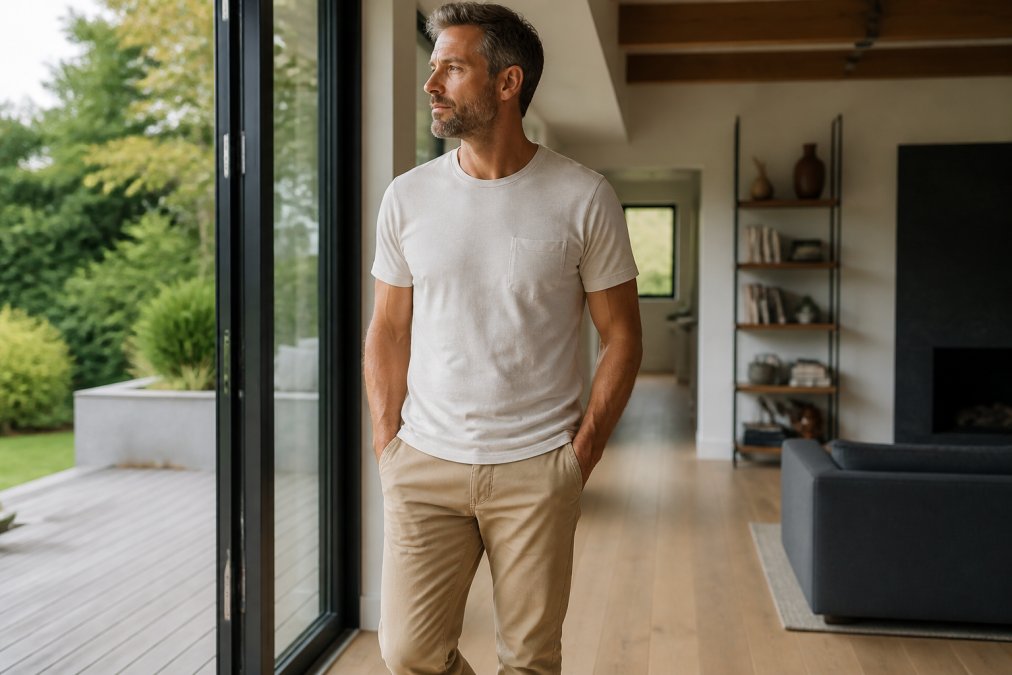
In 2026, 60% of men say they will pay a premium for quality clothing, according to Into The AM's men's fashion trends report. That single number explains why mens wardrobe essentials for relaxed lifestyle have shifted from fast-fashion hauls to small, deliberate closets. At XEDITION77, we build around hand-selected fabrics and timeless cuts rather than trend cycles. This guide covers the pieces that earn their place, the fabrics that survive regular wear, and how to assemble it all without overthinking it.
The 3-3-3 Rule for a Functional Wardrobe
The 3-3-3 rule is a simple capsule wardrobe framework: three tops, three bottoms, three layers, each in a neutral or solid color that pairs with the rest. Nine pieces produce twenty-seven combinations.
Start here:
- Pick three tops: two tees, one polo
- Pick three bottoms: one denim, two chinos
- Pick three layers: a sweatshirt, a hoodie, a light overshirt
- Keep every color in the same family
- Replace only when a piece wears out
How to Style a Relaxed Outfit for Men
Styling a relaxed outfit for men comes down to fit, not effort. Relaxed does not mean oversized. It means the garment sits cleanly on your frame with room to move. Fashion experts point to relaxed double-breasted jackets and softly pleated pants as the silhouette shift defining 2026, per Fashion Soup's men's style trends.
Layering for Comfort and Versatility
Layering makes a nine-piece wardrobe behave like thirty. A tee under a crewneck, a crewneck under an overshirt, an overshirt under a jacket: each layer adds warmth without bulk when the fabrics are thin enough to stack.
The Best Fabrics for Comfortable Men's Clothing
The best fabrics for comfortable men's clothing are natural fibers with enough weight to hold their shape. Cotton, wool, and linen breathe, regulate temperature, and soften with age rather than pilling, which decides whether a shirt lasts two years or ten.
Natural Fibers vs. Synthetic Blends
Natural fibers win on breathability and longevity; synthetics win on cost and wrinkle resistance. For a relaxed wardrobe worn daily, favor natural fibers against your skin.
Fabric |
Breathability |
Durability |
Best For |
|---|---|---|---|
100% ring-spun cotton |
High |
High |
Everyday tees |
Cotton-poly blend (50/50) |
Medium |
High |
Sweatshirts, hoodies |
Linen |
Very high |
Medium |
Warm-weather shirts |
Merino wool |
High |
Medium |
Light layers |
Polyester mesh |
High |
High |
Hat backs, linings |
Essential Tops: T-Shirts and Polo Shirts
Two categories carry the top half of a relaxed wardrobe: heavyweight tees for errands, weekends, and casual Fridays, and polos for when a tee reads too informal.
Rick's Crabs T‑Shirt With Mr.Blunt way →
Denim, Chinos, and Trousers for Everyday Wear
Denim and chinos cover roughly 90% of relaxed-lifestyle dressing, but the difference between a pair that lasts three years and one that fades in six months lives in the fabric spec, not the label. One pair of dark indigo denim and two pairs of chinos in contrasting neutrals is the whole bottom half of your wardrobe, provided each is chosen on weight, weave, and rise rather than a trend silhouette.
Denim: Weight, Weave, and Wash
Denim weight is measured in ounces per square yard, and most relaxed-lifestyle denim sits between 11 oz and 14 oz. Below 11 oz, the fabric blows out at the crotch and back pockets within a year of daily wear; above 14 oz, raw denim takes months to break in and reads too stiff. A 12-13.5 oz sanforized (pre-shrunk) denim is the practical middle: enough body to hold a straight leg, soft enough to wear on day one.
Chinos: Fabric, Rise, and Break
Chinos live or die on three specs: fabric, rise, and break.
- Fabric. 100% cotton twill at 8-10 oz is the standard. Cotton-poly blends (roughly 60/40) resist wrinkles and hold a crease better for travel, but breathe less and develop a slight sheen over time. Stretch chinos (2-3% elastane) are comfortable but lose shape at the knee; if you buy stretch, size down slightly because the fabric relaxes.
- Rise. Mid-rise sits at or just below the navel and works with tucked and untucked tops. Low-rise reads dated and gaps at the back when you sit. High-rise is a style choice, not a default.
- Break. A clean break, the hem just touching the top of the shoe with a single slight fold, is the most versatile. No break reads sharper with loafers; a full break pools fabric and looks sloppy with sneakers.
The Third Trouser (Optional)
If you add a third bottom, make it a softly pleated wool pair in charcoal or mid-gray for dinners and events. Look for a tropical wool or wool-linen blend at 8-10 oz; it drapes, breathes, and resists creasing in a way cotton can't. This is the one bottom where spending more pays off, a $150-$250 wool trouser worn twice a month for five years costs less per wear than a $60 cotton pair replaced annually.
Care That Extends Lifespan
- Denim: Wash cold, inside out, every 8-10 wears, not every wear. Hang to dry. Never machine-dry raw denim, it shrinks unpredictably and sets unwanted creases.
- Chinos: Wash cold, tumble low, and hang immediately to avoid a center crease setting in the wrong place. Skip fabric softener; it coats the twill and dulls the color.
- Wool trousers: Brush after each wear, air overnight, and dry clean only when visibly soiled, typically two to three times a season, not monthly.
Matching Bottoms to the Relaxed Lifestyle
For remote work, one-wash indigo denim and a mid-weight cotton chino cover video calls, errands, and school pickup without a change. For travel, a cotton-poly chino in a dark neutral resists airplane creasing and pairs with both a tee and a polo on arrival. For social-casual settings, the wool trouser reads intentional without reading formal. Three bottoms, three contexts, no overlap.
Footwear and Outerwear for a Relaxed Look
Footwear and outerwear finish the outfit and take the most abuse, so buy them last and buy them well. Three pairs of shoes and three layers cover nearly everything a relaxed wardrobe encounters, provided you understand what you're paying for.
Footwear: Three Pairs, Three Jobs
1. White leather sneaker. The default casual shoe. Look for full-grain or top-grain leather, not bonded (glued-together scraps) leather, which cracks at the flex point within a season. A cupsole construction (the rubber sole is stitched and glued around the upper) lasts longer than a vulcanized sole for daily wear. Expect $80-$150 for a pair that survives two years of regular rotation.
Outerwear: Layer by Season, Not by Trend
Outerwear should match the core nine pieces, not lead the wardrobe in a new direction. Build it in three tiers:
Rick's Crabs T‑Shirt With Mr.Blunt way →
- Cool-weather layer (35-50°F): A crewneck sweatshirt in an 8-10 oz cotton-poly blend.
- Cold-weather layer (below 35°F): A hoodie in a 10-12 oz fleece. A double-lined hood and a kangaroo pocket are functional, not decorative, they add warmth at the neck and hands without gloves.
Fabric and Construction Details That Matter
- Sweatshirt collars. A ribbed knit collar holds shape.
- Stitching. Double-needle stitching at hems and shoulders resists blowouts at the stress points.
- Lining. A lined hoodie slides on and off more easily and holds its shape better over a tee.
Care That Extends Lifespan
- Leather sneakers and boots: Wipe after each wear, condition two to three times a year, and use cedar shoe trees to absorb moisture and hold shape. Never dry leather near a radiator or in direct sun, it cracks.
- Suede loafers: Brush with a suede brush after each wear and reapply a protective spray every 4-6 weeks in wet seasons.
- Sweatshirts and hoodies: Wash cold, inside out, tumble low or hang dry. Skip fabric softener, it coats the fleece and reduces warmth. Zip hoodies closed before washing to prevent the zipper from snagging the fabric.
- Overshirts and chore coats: Wash sparingly; spot-clean when possible. Canvas and cotton-linen soften with age, but over-washing fades them unevenly.
Matching Footwear and Outerwear to the Relaxed Lifestyle
For remote work, the crewneck sweatshirt covers video calls and errands without a change. For travel, the crewneck sweatshirt handles airports, cool cabins, and walking days. For social-casual settings, the crewneck sweatshirt reads intentional without reading formal. Three layers, three contexts, the same logic that governs the rest of the wardrobe.
Conclusion: Your Relaxed Lifestyle Wardrobe
The hardest part of building a relaxed wardrobe is resisting the urge to buy everything at once. A capsule built over three months, one deliberate piece at a time, fits better and lasts longer than a single weekend haul. Start with the 3-3-3 framework, weight your spending toward natural fibers and heavier fabric weights, and replace pieces only when they wear out.
Frequently Asked Questions
What is the 3-3-3 rule for men's clothing?
The 3-3-3 rule is a simple guideline for building a versatile wardrobe. It suggests having three pairs of pants, three shirts, and three pairs of shoes that can all mix and match. This creates a core set of nine items that can form numerous outfits. For a relaxed lifestyle, you might choose chinos, dark denim, and a pair of comfortable trousers, paired with neutral t-shirts and polos, and finished with casual sneakers, loafers, and boots.
What should every guy have in his wardrobe for a relaxed lifestyle?
Every man needs a foundation of well-fitted, timeless pieces. Start with high-quality t-shirts in solid colors, a couple of versatile button-downs, and a comfortable pair of chinos or dark denim. Layering pieces like a crewneck sweatshirt or a lightweight overshirt are essential. For footwear, a clean pair of sneakers and casual boots cover most situations. The goal is to have items that are comfortable, durable, and easy to pair together for an effortless style.
How do you build a capsule wardrobe for a relaxed lifestyle?
Start by auditing your current closet and removing items that don't fit or you no longer wear. Focus on a neutral color palette like navy, gray, olive, and white for maximum versatility. Invest in quality basics made from comfortable fabrics like cotton and linen. Choose pieces that can be layered, such as t-shirts, sweaters, and overshirts. A capsule wardrobe for a relaxed lifestyle prioritizes comfort and durability, ensuring you have a go-to outfit for any casual occasion.
What are the essential fabrics for comfortable men's clothing?
Natural fibers like cotton, linen, and merino wool are excellent for comfort. Cotton is breathable and durable, making it perfect for t-shirts and chinos. Linen is lightweight and highly breathable, ideal for warm weather. Merino wool is soft, temperature-regulating, and odor-resistant, great for sweaters. Blends like cotton-polyester can offer added durability and shape retention. Prioritizing these fabrics ensures your clothing feels good and lasts longer.
How can I look polished while maintaining a relaxed style?
The key is fit and fabric quality. Choose well-fitted, not tight, clothing in neutral colors. A crisp, solid-colored t-shirt paired with tailored chinos and clean sneakers looks polished yet relaxed. Layering a lightweight overshirt or a knit sweater adds structure without formality. Pay attention to details like hem length and sleeve fit. Investing in higher-quality fabrics ensures your clothes drape well and maintain their shape, elevating your overall look.
What pieces are necessary for a versatile, low-maintenance wardrobe?
A versatile wardrobe includes a few core items: two to three pairs of pants (chinos, dark denim), four to five t-shirts in solid colors, one or two button-down shirts, a layering piece like a sweater or hoodie, and a casual jacket. For footwear, a pair of neutral sneakers and casual boots work for most occasions. These pieces should be made from durable, easy-care fabrics that can be mixed and matched effortlessly.


