
September 24, 2026
Benefits of High Quality Fabrics: A 2026 Guide

Table of Contents
- Why High Quality Fabrics Matter More Than Ever in 2026
- How to Identify Fabric Quality Before You Buy
- Natural vs Synthetic Fibers Comparison: Which Wins for Comfort and Skin
- Cost-Per-Wear: The Financial Case for Premium Textiles
- Fabric Durability and Maintenance: Making Quality Last
- The Environmental and Psychological Payoff of Durable Clothing
- Frequently Asked Questions
Last Updated: September 24, 2026
Why High Quality Fabrics Matter More Than Ever in 2026
The benefits of high quality fabrics start with how they feel against your skin and end with how they hold up years later. According to the Cotton Incorporated Global Lifestyle Monitor Survey, 67% of consumers rate cotton clothing as the most comfortable fiber, 66% call it the softest, and 59% name it the best quality. Those numbers matter because the market is finally catching up to what careful buyers already knew.
This guide from XEDITION77 breaks down what separates a well-made garment from a disposable one, how to spot the difference before you spend a dollar, and why the math favors better fabric almost every time.
Fast fashion trained a generation to treat clothing as temporary. Early 2026 market analysis from Checkpoint Systems' textile trend report shows the pendulum swinging back: shoppers now seek out durable fabrics with handmade character, a direct response to disposable production and AI-generated design. Quality is no longer a niche preference. It's the mainstream correction.
Here's what most buying guides get wrong: they treat fabric quality as a luxury concern. It isn't.
How to Identify Fabric Quality Before You Buy
Fabric quality is the measurable combination of fiber content, weave structure, and finishing that determines how a garment feels, wears, and lasts. You can assess all three in under a minute, in person or from a detailed product listing.
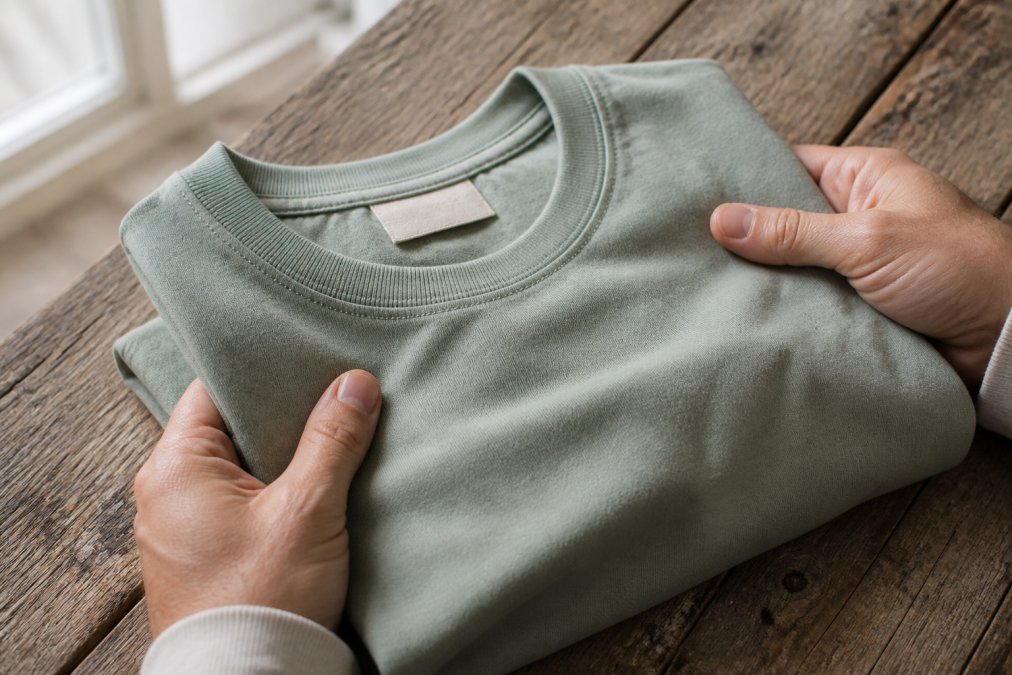
The Tactile Test: What Your Hands Can Tell You
Squeeze the fabric and release it. Quality cotton springs back without deep creases. Rub the surface between thumb and fingers: pilling-prone blends feel fuzzy or grabby, while tightly woven long-staple cotton feels smooth and cool.
Reading Labels and Weave Structure
Look for specifics, not adjectives. "100% ring-spun cotton" and a stated fabric weight tell you more than "premium blend" ever will. A 6.1 oz garment-dyed tee, for example, signals real substance; most fast-fashion tees run closer to 4 oz.
Check the construction details too:
Rick's Crabs T‑Shirt With Mr.Blunt way →
- Tubular knit (no side seams) resists twisting through repeated washing
- Double-needle stitching reinforces stress points at hems and shoulders
- Pre-shrunk fabric means the fit you buy is the fit you keep
- Garment-dyed finishing produces softer hand-feel and richer color depth
Natural vs Synthetic Fibers Comparison: Which Wins for Comfort and Skin
For comfort and skin sensitivity, natural fibers win. Research published through the National Center for Biotechnology Information found that natural fibers like cotton are less likely to worsen atopic dermatitis symptoms than synthetics such as polyester and nylon. If your skin runs sensitive, that finding alone should shape your wardrobe.
Factor |
Natural Fibers (Cotton) |
Synthetic Blends |
|---|---|---|
Breathability |
High |
Low to moderate |
Skin sensitivity |
Skin-friendly, hypoallergenic |
Can irritate sensitive skin |
Moisture-wicking |
Moderate |
High |
Biodegradability |
Yes |
Limited |
Pilling resistance |
Moderate |
High |
Hand-feel over time |
Improves with washing |
Degrades |
Cost-Per-Wear: The Financial Case for Premium Textiles
Cost-per-wear is the purchase price divided by the number of times you actually wear the garment. A $27 tee worn 150 times costs 18 cents per wear. A $9 tee that pills after 15 washes and gets retired costs 60 cents per wear. The cheap shirt loses.
A quick framework for your next purchase:
- Estimate wears per year (be honest)
- Estimate realistic lifespan in years
- Divide price by total wears
- Compare against the cheap alternative's real lifespan, not its sticker price
Fabric Durability and Maintenance: Making Quality Last
Durability is set at the mill, but it is decided in your laundry room. Three variables govern how long a garment survives: fiber length, weave tightness, and how you treat it after purchase. Get the first two right at the store and the third becomes almost automatic.
Why Long-Staple Fiber Outlasts Short-Staple Fiber
Cotton fiber is graded by staple length, measured in inches. Short-staple upland cotton runs roughly 0.75 to 1 inch; long-staple varieties like Pima and Supima run closer to 1.25 to 1.5 inches. Longer fibers mean fewer exposed ends per inch of yarn, and exposed fiber ends are what tangle into pills. That is the entire mechanical reason a long-staple tee resists pilling while a short-staple bargain tee fuzzes after a month.
What Actually Breaks Down a Garment
Four forces do the damage, and only one of them is unavoidable:
- Mechanical abrasion, tumbling against other garments and the drum wall. This is the single largest contributor to surface wear. Washing on a shorter cycle and turning garments inside out cuts it substantially.
- Heat, hot water and high-heat drying shrink cotton, set wrinkles, and accelerate dye loss. Most residential water heaters are set between 120F and 140F, well above the 90F ceiling that quality cotton prefers.
- Chemistry, chlorine bleach oxidizes cellulose fibers directly. It does not just fade color; it physically weakens the yarn. Oxygen-based whiteners are the gentler substitute.
- Agitation in the wash, the agitator post on a top-loading machine is harder on knits than a front-loader's tumble action.
A Care Routine That Preserves Fiber Integrity
- Machine wash cold, 90F maximum, on a normal or gentle cycle
- Turn garments inside out and wash with similar colors and weights
- Skip chlorine bleach entirely; use oxygen-based whitener if needed
- Tumble dry low, or line dry, heat is the enemy, not water
- Remove promptly and hang or fold to avoid set-in wrinkles
- Iron on low heat, inside out, if needed
- Never dry clean cotton knits; the solvents are harsh on garment-dyed finishes
Reading the Care Label Like a Buyer
Care labels are not just instructions, they are a signal of what the manufacturer expects the fabric to tolerate. A label that says "machine wash cold, tumble dry low" is telling you the fabric was finished to hold up under normal residential care. A label that says "dry clean only" on a cotton tee is usually a sign the dye or finish is fragile, not that the fiber is precious.
The Environmental and Psychological Payoff of Durable Clothing
Most articles stop at "buy less, buy better." That is a slogan, not an explanation. Two underreported angles make the case concrete: what happens to a garment at the end of its life, and what happens to you while you are wearing it.
Rick's Crabs T‑Shirt With Mr.Blunt way →
The Microplastic Lifecycle Nobody Talks About
Every time a synthetic garment is washed, it sheds microfibers, microscopic strands of polyester, nylon, or acrylic that slough off the yarn and travel through wastewater. Most municipal treatment plants capture a large share of these fibers in sludge, but a meaningful fraction reaches rivers and oceans, where they persist for decades because synthetic polymers do not biodegrade on any human timescale.
Enclothed Cognition: What Quality Does to Your Head
Psychologists use the term enclothed cognition to describe how what you wear affects how you think and perform. The effect is not mystical. It runs through three ordinary mechanisms:
- Fit and drape, a garment that sits correctly on the shoulders and falls cleanly at the hem removes a low-grade distraction you may not consciously notice but that competes for attention all day.
- Tactile feedback, smooth, substantial fabric against the skin produces a steady, subtle signal of being put-together. Scratchy, thin fabric produces the opposite signal, and it is constant.
- Reduced decision load, a wardrobe of pieces you trust eliminates the morning negotiation over what will look right and hold up. Fewer decisions, less friction.
The Compounding Effect
Put the two together and the argument sharpens. A durable natural-fiber garment reduces synthetic microfiber shedding over its lifetime and removes a daily source of low-grade friction from your routine. The environmental case and the personal case point in the same direction, which is rare and worth noticing. The cheap alternative fails on both counts, it pollutes longer than it serves you, and it stops feeling good long before it stops existing.
Frequently Asked Questions
What are the primary indicators of high-quality fabric?
Look for tight weave structure, substantial hand-feel, and fiber density. High-quality cotton feels dense but soft, with a slight weight that suggests durability. Check for double-needle stitching, sewn-in labels, and pre-shrunk finishes. Garment-dyed fabrics often show richer color saturation and a broken-in texture that lasts. According to Cotton Incorporated's 2026 survey, 59% of consumers rate cotton as the best quality fiber, citing softness and comfort as key signals.
How does fabric quality impact the longevity of clothing?
Higher-quality fabrics resist pilling, shrinkage, and color fading better than cheap alternatives. Dense weave structures and ring-spun cotton maintain tensile strength through repeated washing. Garment-dyed heavyweight cotton, for example, holds its shape and color for years. A 2026 Checkpoint Systems report notes that demand for durable fabrics is rising as consumers reject fast fashion. Proper care, like cold washing and low tumble drying, extends garment life significantly.
Why do natural fibers often outperform synthetic blends?
Natural fibers like cotton offer breathability, moisture-wicking, and hypoallergenic properties that synthetic blends struggle to match. A 2021 NCBI study found that natural fibers are less likely to worsen atopic dermatitis compared to polyester and nylon. Cotton's fiber density and weave structure also provide better thermal regulation. While synthetics offer elasticity and quick-drying benefits, they can trap odor and shed microplastics. For everyday comfort and skin-friendly wear, natural fibers remain the top choice.
How can you distinguish between premium textiles and fast-fashion alternatives?
Check the label for fiber composition and origin. Premium textiles often list 100% ring-spun cotton or specific weave types. Feel the fabric: quality cotton has a substantial, soft hand-feel without being stiff. Inspect seams for double-needle stitching and look for sewn-in labels rather than printed tags. Fast fashion often uses thin, loose weaves that pill quickly. A 2026 McKinsey report highlights that brands focusing on product quality are winning consumer trust over price-led competitors.