


Table of Contents
- Start With the Fabric: Most Durable Fabrics for Clothing
- How to Identify High Quality Clothing Before You Buy
- Clothing Construction Quality Checklist: Seams, Stitching, and Hardware
- Fabric Weight and Density: Why GSM Matters for Durable Apparel
- Ethical Manufacturing and Supply Chain Transparency as Quality Signals
- Caring for Durable Apparel to Extend Its Lifespan
- Repairability, Mending, and Assessing Second-Hand Durable Apparel
- Conclusion
- Frequently Asked Questions
Last Updated: September 11, 2026
Start With the Fabric: Most Durable Fabrics for Clothing
Learning how to choose durable apparel starts with one question: what is the fabric actually made of? Natural fibers like cotton, wool, linen, and hemp remain the most durable fabrics for clothing because their long staple fibers resist pilling and hold their shape through repeated wash cycles. At XEDITION77, we build our garments around hand-selected fabrics for exactly this reason.
Durable apparel is clothing constructed from high-tensile-strength fibers, reinforced stitching, and quality hardware so it withstands regular wear without losing shape, color, or structural integrity.
The Federal Trade Commission's textile labeling rules require accurate fiber content disclosure on every garment tag, which makes the label your first durability checkpoint.
Natural Fibers That Hold Up
Long-staple cotton, merino wool, linen, and hemp outperform short-fiber alternatives because longer fibers create stronger yarns with fewer weak points. Merino wool resists odor and holds shape; linen grows softer with each wash; hemp has exceptional tensile strength.
A common mistake is assuming all cotton is equal. Cheap short-staple cotton pills within months. Look for combed or ring-spun cotton on the label.
Synthetic Blends and When They Help
Synthetic fibers add abrasion resistance where natural fibers alone fall short. A small percentage of polyester or elastane in a cotton blend can improve shape retention and stretch recovery, which matters in workwear and everyday basics.
The trade-off: high synthetic content traps odor and pills faster. A blend works best when natural fibers dominate.
How to Identify High Quality Clothing Before You Buy
High quality clothing reveals itself through physical inspection, not the hangtag. Before you buy, run four checks in this order: fabric hand and weight, seam construction at stress points, hardware function, and repairability. Each check takes under a minute and together they predict how the garment will look after a year of regular wear.
The Four-Point Pre-Purchase Inspection
1. Fabric hand and weight. Crumple a section of the fabric in your fist, release it, and watch how it recovers. Dense, tightly woven fabric springs back with few deep creases; loose, thin fabric stays wrinkled and feels flimsy. Hold it up to light, if you can see your hand clearly through a t-shirt body, the fabric is likely too thin to resist pilling and transparency over time. For knits, gently stretch a section sideways and let go; good recovery means the fabric snaps back rather than sagging.
2. Seam construction at stress points. Turn the garment inside out. Look at the armhole, side seam, and crotch or hem. Felled seams (where one fabric edge is folded over another and stitched) and double-stitched seams distribute tension better than single-stitched seams. Check stitch density by counting stitches along one inch, roughly 10 to 12 stitches per inch is a common durability benchmark. Fewer, longer stitches create gaps that pull open under stress.
3. Hardware function. Zip the zipper fully up and down three times. A quality metal zipper glides without catching, and the pull tab feels solid rather than hollow. Flex the zipper tape where it meets the fabric, if the stitching there looks sparse, the zipper will likely separate from the garment before the zipper itself fails. Press each button through its buttonhole; a button that requires deliberate effort and sits on a raised shank is less likely to pop off than a flat-sewn one.
4. Repairability. Check for a spare button sewn inside the garment or attached to the tag. Look at the seam allowance, the fabric margin inside the seam. A wider allowance (roughly half an inch or more) gives a tailor room to re-stitch or adjust the garment later. Narrow allowances that are serged close to the stitch line leave almost nothing to work with if a seam fails.
The Wash Test Protocol
The wash test protocol is a standardized pre-purchase stress assessment you can run in the fitting room or at home before committing to a garment. It has three steps:
- Care label check. Confirm the garment can survive at least 50 home wash cycles based on its fiber content and construction. Natural fibers with tight weaves and reinforced seams generally handle this; loose knits and single-stitched seams typically fail sooner.
- Colorfastness rub. Dampen a white cloth or tissue and rub it firmly on a hidden interior area, inside a hem, under a collar, or along an inner seam. If dye transfers visibly to the cloth, expect fading and possible color bleeding onto other garments in the wash.
- Pilling and abrasion check. Rub the fabric against itself briskly for 10 to 15 seconds in a hidden area. If loose fibers ball up or the surface fuzzes immediately, the garment is prone to pilling.
Garments with loose threads, thin fabric, single-stitched seams, or hardware that catches will fail this protocol quickly. Use it as a filter before you spend money, not as a post-purchase regret.
Clothing Construction Quality Checklist: Seams, Stitching, and Hardware
Seam construction separates apparel that lasts a year from apparel that lasts a decade. Felled seams, high stitch density, and reinforced stress points are the three markers to check.
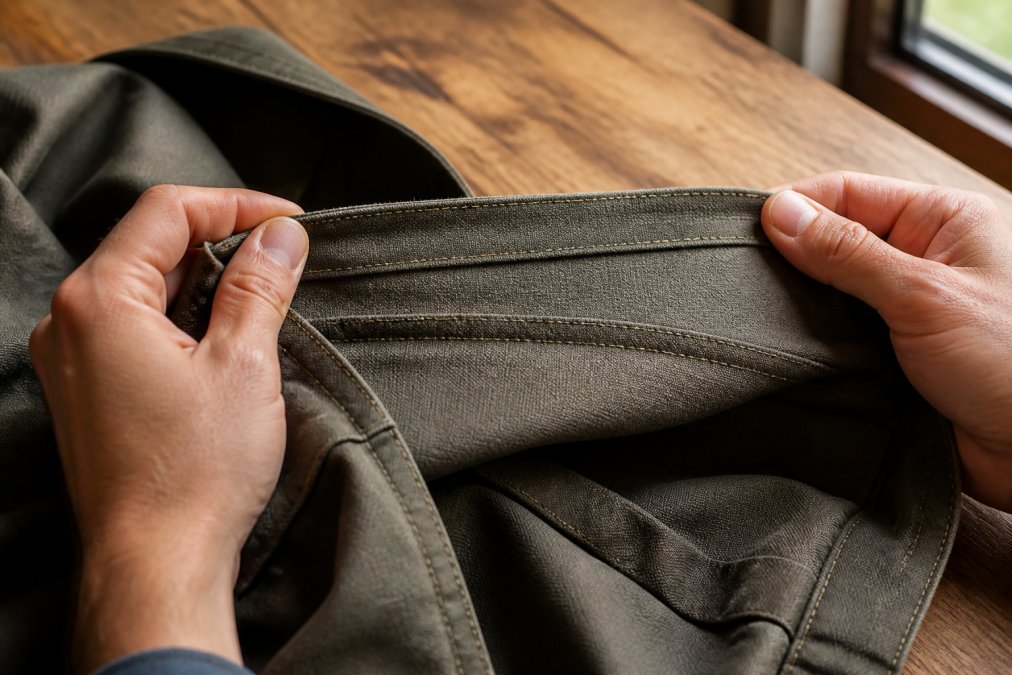
Use this checklist when inspecting any garment:
- Seams are felled or double-stitched, not single-stitched
- Stitch density is tight and even, roughly 10-12 stitches per inch
- Stress points (armholes, crotch, pocket corners) have bar-tack reinforcement
- Seam allowance is wide enough to prevent fraying
- No loose threads, skipped stitches, or puckering along high-tension joins
Buttons, Zippers, and Reinforcement Points
Hardware quality tells you what the manufacturer prioritized. Metal zippers with smooth pulls outlast plastic; buttons with a raised shank and cross-stitching stay attached; rivets at pocket corners prevent tearing.
What most guides miss is the button shank. A flat-sewn button pulls through fabric within months. A shanked button distributes tension and survives years of daily fastening.
Fabric Weight and Density: Why GSM Matters for Durable Apparel
GSM, or grams per square meter, measures fabric density and directly predicts how a garment ages. Heavier fabrics resist thinning, pilling, and transparency better than lightweight ones. For t-shirts, 180-220 GSM is standard; 240 GSM and above signals a heavyweight piece built to last (textileexchange.org).
XEDITION77's garment-dyed tees use dense 6.1 oz cotton, a weight that drapes substantially and holds its shape through repeated wear. Fabric weight, not brand name, is the honest indicator of longevity.

Ethical Manufacturing and Supply Chain Transparency as Quality Signals
Most guides treat supply chain transparency as an ethical checkbox. In practice, it is also a durability signal, and one you can verify without trusting a brand's marketing copy. A brand that knows exactly which factory stitched a garment and which mill wove its fabric tends to enforce tighter construction standards, because defects trace back to a specific source. Opaque supply chains hide inconsistent stitching, substituted materials, and skipped reinforcement steps.
What Transparency Actually Looks Like
Transparency is not a vague sustainability page. Concrete markers include:
- A published factory list with names and locations, updated at least annually
- Fiber sourcing disclosure that names the mill or region, not just the country
- Care and repair information provided at the point of sale, not buried in a FAQ
- A stated policy on spare buttons, replacement zippers, or repair services
When a brand publishes its factory list or fiber sourcing, that openness usually reflects confidence in the product. When a brand cannot say where a garment was made beyond a country name, that gap often correlates with inconsistent construction.
The Repairability Angle Most Guides Miss
Durability is not only about how a garment is built, it is about whether it can be fixed. A transparent brand makes repair possible by design. Look for these signals:
- Standard hardware sizes. Buttons in common diameters (for example, 18L or 20L, which are standard button sizes) are easy to replace. Proprietary or unusual buttons are not.
- Generous seam allowances. A wider allowance inside the seam lets a tailor let out or take in the garment, or re-stitch a failed seam, without patching.
- Replaceable components. Zippers that are stitched rather than glued can be removed and replaced. Glued zippers often destroy the surrounding fabric when they fail.
- Published repair guidance. Brands that explain how to reattach a button or mend a seam are signaling that the garment is meant to be kept, not replaced.
Applying This to Second-Hand and Vintage Assessment
Durability is often best proven by age. When you assess a second-hand or vintage piece, transparency works in reverse: the garment itself is the record. Flip it inside out and look for:
- Even, intact stitching with no repairs done in mismatched thread
- Fabric that still holds structure, not stretched or baggy at the elbows and knees
- Hardware that still functions, especially zippers and snaps
- No dry rot, thin patches, or moth damage in wool
- A brand label that identifies the maker, which lets you research its construction standards
Vintage garments often outlast modern fast-fashion because they were built with wider seam allowances and denser weaves. Inspect the fabric's hand and the construction, not the era. A garment that has already survived a decade of wear is the strongest durability evidence you can find.
Caring for Durable Apparel to Extend Its Lifespan
Wash less, in cold water, and inside out. Heat is the enemy of fabric aging: it shrinks natural fibers, breaks down elastane, and fades dye. Line-drying instead of machine-drying can double a garment's wearable life (energy.gov).
- Turn garments inside out before washing
- Use cold water and a gentle cycle
- Skip fabric softener, which coats fibers and reduces breathability
- Air-dry when possible; tumble low if you must
- Store folded rather than hung for knits to prevent stretching
Repairability, Mending, and Assessing Second-Hand Durable Apparel
Durable apparel is designed to be repaired, not replaced. Check whether seams can be re-stitched, whether buttons are standard sizes, and whether the fabric has enough seam allowance to let out or take in.
When assessing second-hand or vintage pieces, flip them inside out first. Look for:
- Even, intact stitching with no repairs done in mismatched thread
- Fabric that still holds structure, not stretched or baggy at the elbows and knees
- Hardware that still functions, especially zippers and snaps
- No dry rot, thin patches, or moth damage in wool
Vintage garments often outlast modern fast-fashion because they were built with wider seam allowances and denser weaves. Inspect the fabric's hand and the construction, not the era.
Conclusion
Finding clothing that still looks good after a year of regular wear comes down to reading fabric content, checking seam construction, and buying from brands that stand behind their materials. XEDITION77 offers hand-selected fabrics, timeless refinement, and exclusive Mr. Blunt themed designs built for a relaxed, post-career lifestyle. Explore our Rick's Crabs T-Shirt and Statue of Liberty Vintage Flag Tee to see heavyweight, garment-dyed construction in person. Shop now and build a smart wardrobe that lasts.

Frequently Asked Questions
What are the most durable fabrics for everyday clothing?
Look for tightly woven natural fibers like hemp, linen, and organic cotton, or durable synthetics like polyester and nylon. Merino wool also performs well for temperature regulation and odor resistance. Fabric weight matters too: a higher GSM (grams per square meter) generally means a thicker, longer-lasting cloth. Blends can combine comfort with strength, but check that the natural fiber content is high enough to feel good against your skin.
How can you tell if a garment is high quality before buying?
Inspect the seams first. Look for felled seams, which enclose raw edges and resist fraying, and check stitch density: 10 to 12 stitches per inch is a good sign. Tug gently on buttons and zippers to test hardware quality. Feel the fabric for density and weight. Also check for a button shank, which reduces strain on the cloth. These construction details separate durable apparel from fast fashion.
Does higher price always mean better clothing durability?
No. Price often reflects branding, marketing, or retail markup rather than construction quality. A $200 shirt with single-stitched seams will wear out faster than a $60 shirt with felled seams and dense stitching. Focus on fabric weight, seam type, and hardware quality instead of the price tag. Supply chain transparency and ethical manufacturing claims can also signal a brand that invests in lasting materials.
How should you care for durable clothing to extend its lifespan?
Wash less often and in cold water to reduce fabric aging and color loss. Turn garments inside out before washing to protect the outer surface from abrasion. Avoid overloading the machine, which stresses seams. Air-dry when possible; high heat breaks down fibers and elastic. For merino wool and linen, hand washing or a gentle cycle preserves tensile strength. Store folded rather than hung for knits to prevent stretching.


