


Table of Contents
- What Makes Construction Workwear Actually Durable
- The Best Work Pants for Construction: What to Look For
- Safety Features and Compliance Standards That Matter
- How to Care for Heavy-Duty Workwear So It Lasts
- Climate-Specific Layering Systems for Year-Round Comfort
- Best Clothing for Tradesmen Off Duty
- Frequently Asked Questions
Last Updated: September 17, 2026
What Makes Construction Workwear Actually Durable
Durable clothing for construction workers starts with construction quality, not branding, and that same standard defines durable clothing for every trade. According to Cotton Incorporated's 2026 U.S. Durability Survey, 78% of consumers name quality of construction as the primary factor in how long clothing lasts. That number matters on a job site, where a garment either survives abrasion, tension, and repeated washing or it does not.
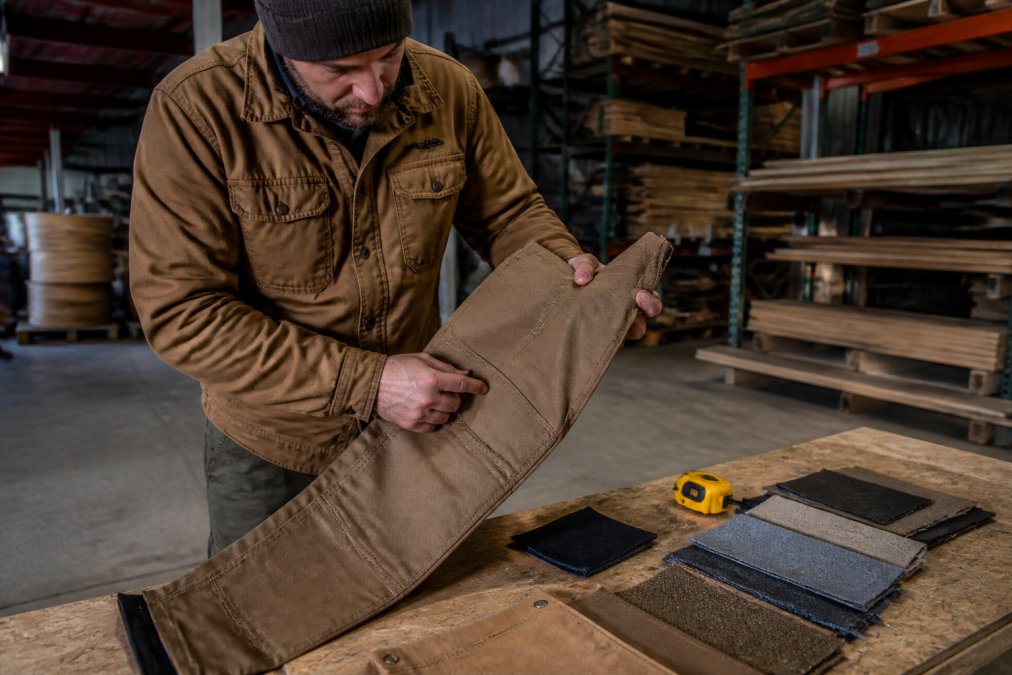
Fabric Weight, Fiber Content, and Tear Strength
Fabric weight and fiber content determine how a garment handles abrasion and tear strength. Heavyweight canvas, typically 10 to 12 oz per square yard, resists snags and punctures better than lighter twill. Cotton blends balance breathability with abrasion resistance, while ripstop's crosshatch weave stops small tears from spreading.
Reinforced Stitching and Double-Knee Construction
Reinforced stitching and double-knee construction separate real workwear from fashion. Double-needle seams and bar-tacked stress points hold up under repeated bending and kneeling, while double-knee construction adds a second fabric layer where pants wear out first and articulated knees cut the tension that causes blowouts.
The Best Work Pants for Construction: What to Look For
The best work pants for construction combine heavyweight fabric, double-knee construction, and articulated knees. Look for utility pockets that sit above the thigh rather than on it, so tools do not dig in when you squat. Stretch panels at the waist and gusseted crotches prevent the seam failure that ends most work pants early.
| Feature | Why It Matters | What to Avoid |
|---|---|---|
| Double-knee construction | Adds a second fabric layer at the highest-wear point | Single-layer knees with decorative stitching |
| Articulated knees | Reduces fabric tension when bending or kneeling | Flat-cut knees that pull at the seam |
| Utility pockets | Keeps tools accessible without snagging | Pockets sewn below the thigh line |
| Stretch panels | Allows movement without seam stress | Rigid waistbands with no give |
| Reinforced stitching | Holds seams under repeated load | Single-stitched inseams and hems |
Safety Features and Compliance Standards That Matter
Safety features on construction workwear exist to meet job site safety requirements, not to look technical. The categories that matter most, high-visibility clothing, impact protection, and flame-resistant garments, are each governed by a consensus standard that determines whether a garment is actually compliant or just looks the part.
High-Visibility Requirements and Impact Protection
High-visibility garments use fluorescent background fabric and retroreflective tape to make workers visible to equipment operators. ANSI/ISEA 107 sorts garments into three performance classes based on background and reflective material and the wearer's expected exposure to traffic and moving equipment:
- Type O (Class 1), off-road use, where workers are separated from traffic and equipment. Lightest coverage.
- Type R (Class 2 and Class 3), roadway and temporary traffic control. Class 2 is the common vest-and-tee tier; Class 3 adds sleeves and more reflective tape for higher-speed or low-light work.
- Type P, public safety activities such as law enforcement and emergency response.
Fit, Sizing, and the Compliance Gap
Fit is part of compliance: a hi-vis vest that rides up or a knee pad that shifts leaves the wearer exposed. That fit problem is not evenly distributed. CPWR, The Center for Construction Research and Training has documented significant challenges for women, non-binary, and transgender workers in accessing properly fitting protective gear. Standardized sizing assumes a body type that does not match a large share of the workforce, and the result is comfort problems that become safety problems.
What to Check Before You Buy
- Confirm the class or type on the garment label matches the employer's hazard assessment.
- Check that reflective tape is intact and not covered by tool belts, backpacks, or outer layers.
- Verify FR garments carry the NFPA 2112 or NFPA 70E label if the task requires it.
- Replace hi-vis garments when the fluorescent color fades or the tape peels, visibility degrades before the garment wears out.
How to Care for Heavy-Duty Workwear So It Lasts
How to care for heavy-duty workwear comes down to three habits: wash cold, skip the dryer when you can, and repair small damage before it spreads. Cotton Incorporated's 2026 survey found 70% of consumers name laundering methods as a primary factor in clothing longevity, the wash cycle is the biggest variable you control.
Laundering, Repairs, and Repairability
Wash workwear in cold water on a normal cycle, inside out, with a mild detergent. Skip fabric softener, which coats fibers and reduces moisture-wicking performance. Tumble dry on low or line dry; high heat shrinks cotton and breaks down elastic in stretch panels.
- Wash cold, inside out, mild detergent
- Skip fabric softener entirely
- Tumble dry low or line dry
- Inspect knees, elbows, and hems monthly
- Repair small damage within a week
Climate-Specific Layering Systems for Year-Round Comfort
Most workwear guides tell you to "dress in layers" and stop there. That advice is useless on a job site where the temperature swings 40 degrees between a 6 a.m. start and a 2 p.m. pour. Below is a layering system with actual temperature ranges and fabric choices, so one kit works from a cold morning to a hot afternoon without hauling a second outfit to the truck.
Base Layer: The One That Does the Most Work
The layer closest to your skin does the most work. A moisture-wicking base layer keeps you dry in heat and prevents the chilled, damp feeling that makes cold-weather work miserable. Cotton holds sweat against the skin and stays wet, making it a poor base layer for cold or high-exertion work even though it is comfortable in mild, dry conditions.
- Above 75°F, a lightweight synthetic or merino base layer, or a breathable short-sleeve work tee in a moisture-wicking blend. Add ventilation where you can: mesh-backed tops, underarm gussets, and open weaves move heat out.
- 50-75°F, a midweight synthetic or merino base layer under a light work shirt. This is the range where most people overdress; a single midweight base plus a breathable outer shell is usually enough.
- Below 50°F, a midweight to heavyweight merino or synthetic base layer, with a fleece or wool mid layer over it.
Mid Layer: Trapping Air, Not Bulk
For winter, thermal regulation depends on trapping air, so a fleece or wool mid layer outperforms a single thick shirt. It is also the layer you shed first when you start moving, so pick something you can remove without stripping down to your base layer in the cold.
- Fleece, light, fast-drying, and cheap. Good for active work where you generate heat.
- Wool or wool blend, warmer for its weight and stays warm when damp. Better for standing work and cold, wet conditions.
- Insulated puffer mid layers, warmest for the weight, but they trap sweat during hard exertion. Best for low-activity work in deep cold.
Outer Layer: Wind, Water, and Abrasion
Rugged outerwear with water-repellent finishes handles rain and wind without trapping sweat. The outer layer also takes abrasion from scaffolding, rebar, and truck beds, so it needs to be the toughest garment in the system. Choose a water-repellent finish over a fully waterproof membrane for active work, a membrane that cannot breathe leaves you as wet from sweat as from rain.
A Practical Temperature Guide
| Conditions | Base | Mid | Outer |
|---|---|---|---|
| 75°F+ | Lightweight moisture-wicking tee | None | None, or a breathable hi-vis vest |
| 50-75°F | Midweight base | Light fleece (optional) | Light shell for wind and rain |
| 30-50°F | Midweight to heavyweight base | Fleece or wool | Insulated shell |
| Below 30°F | Heavyweight base | Fleece plus insulated mid | Insulated, wind-resistant shell |
The Transition Problem
The hard part of layering is not the cold, it is the transition. A 6 a.m. start at 35°F that hits 70°F by afternoon means adding and removing layers all day. The fix is a system where every layer comes off independently and the base layer is presentable on its own, which is why a moisture-wicking work tee that looks like a shirt, not an undershirt, anchors a year-round kit.
Best Clothing for Tradesmen Off Duty
The best clothing for tradesmen off duty carries the same construction standards into a relaxed setting. That is where XEDITION77 fits: hand-selected fabrics and timeless designs built for comfort after the shift ends. The Xedition 77 Vintage Flag Tee is a heavyweight, garment-dyed cotton tee at $26.58, with double-needle seams and a relaxed fit that holds shape through wear and wash.

Frequently Asked Questions
What materials are most durable for construction work clothes?
Heavyweight cotton canvas, cotton blends, and ripstop fabric offer the best balance of tear strength and abrasion resistance for construction. Reinforced stitching at stress points and double-knee construction extend lifespan further. According to Cotton Incorporated's 2026 Durability Survey, 78% of consumers rank quality of construction as the top factor in clothing longevity, followed by laundering methods at 70% and fiber content at 68%. Look for tightly woven fabrics with reinforced seams rather than lightweight blends that pill or tear after repeated wash cycles.
How do I choose the right work pants for construction?
Prioritize double-knee construction, articulated knees for mobility, and utility pockets sized for tools. Abrasion resistance matters more than stretch, though stretch panels at the waist and gusset improve ergonomic fit without sacrificing durability. Check that seams are double-needle stitched and that fabric weight sits at 10 oz or higher for demanding job site conditions. Moisture-wicking properties help with thermal regulation during summer months. Try pants on with the boots and knee pads you actually wear to confirm the fit works in practice.
Are there specific safety standards for construction clothing?
Yes. High-visibility clothing must meet ANSI/ISEA 107 standards for reflectivity and color, and employers are required under OSHA 1926.201 to ensure workers wear appropriate high-vis gear when near traffic or heavy equipment. Personal protective equipment including hard hats, gloves, and eye protection falls under OSHA 1926 Subpart E. Workwear itself does not carry a single certification, but hi-vis garments and flame-resistant clothing do have specific performance standards you should verify before buying.
How often should construction workers replace their workwear?
Replace workwear when you see thinning fabric at knees and elbows, broken stitching, or faded hi-vis striping that no longer reflects light. Most heavy-duty pants last six to twelve months with regular wear and proper care. Extending a garment's lifespan by just nine months can reduce its carbon, water, and waste footprint by 20%, according to WRAP research. Rotating two or three pairs and laundering them correctly stretches that timeline considerably.
Construction workwear fails for predictable reasons: thin fabric, single-stitched seams, and a wash cycle that destroys what the factory built. Fix those three and your gear lasts years instead of months. XEDITION77 builds apparel around hand-selected fabrics, timeless refinement, and exclusive 'Mr. Blunt' themed designs that carry the same durability mindset off the clock. Get started with XEDITION77 and find clothing that holds up to the work and the weekend.


