


Table of Contents
- Why Your Off-Duty Wardrobe Deserves the Same Standards as Your Work Gear
- What Makes Clothing Work for a Tradesman Off Duty: The 4 Core Tests
- The 5 Best Picks for Tradesmen Off Duty
- Durable Casual Wear for Men: What to Look For in Fabric and Construction
- How to Style Workwear for Casual Settings: 3 Outfit Formulas
- Building a Versatile Off-Duty Wardrobe Essentials Capsule
- Common Mistakes to Avoid When Buying Off-Duty Workwear
- Final Verdict: Choose Pieces That Age as Well as You Do
- Frequently Asked Questions
Last Updated: September 5, 2026
Why Your Off-Duty Wardrobe Deserves the Same Standards as Your Work Gear
You spent decades choosing boots that hold up to concrete, jeans that survive kneeling on rebar, and shirts that breathe through a 90-degree afternoon. Then the weekend comes, and the standard drops to whatever is cheapest on the rack. That is backwards. The best clothing for tradesmen off duty applies the lessons learned on the job site to a different setting.
The gap between work gear and casual wear is where most guys lose money. A $15 t-shirt that pills after three washes costs more per wear than a $30 shirt that lasts two years (fashionrevolution.org). At XEDITION77, we built our collection around that math, pairing hand-selected fabrics with construction details that survive the rotation.
Below, we will show you exactly what to look for, the five pieces we rate highest for off-duty wear, and how to style them. But first, here is what most guides get wrong: they treat off-duty clothing as a completely different category. It is not. The same principles that keep you comfortable on a roof keep you comfortable at a barbecue.
What Makes Clothing Work for a Tradesman Off Duty: The 4 Core Tests
Durable casual wear for men starts with a simple question: would this survive a weekend of actual living? Hauling firewood, changing a tire, kneeling to fix a sprinkler head, then walking into a diner without looking like you slept in your clothes. Run every piece through these four tests before you buy.
Test 1: Fabric weight and density. Lightweight shirts at 4.2 oz feel fine in the store but wear thin fast (textileschool.com). Look for medium-weight cotton around 6.0 oz or heavyweight canvas at 6.1 oz and above. Heavier fabric drapes better, holds its shape, and resists the baggy-elbow look that cheap tees develop.
Test 2: Construction details. Flip the shirt inside out. Double-needle stitching at the sleeves, neck, and hem matters. Side seams prevent twisting in the wash. Shoulder tape keeps the shape through repeated wear. A ribbed knit collar that snaps back instead of stretching into a bacon neck.
Test 3: Movement and fit. Articulated cuts and relaxed fits beat slim fits for anyone who has actually used their body for work. You need to reach, bend, and twist without the fabric binding across the shoulders or riding up your back. The roomy boxy cut that feels loose in the store is the one that still fits after Thanksgiving dinner.
Test 4: How it ages. Garment-dyed finishes and distressed details are not just aesthetics; they mean the piece looks better at month six than month one. A shirt that fades evenly and softens with each wash is a shirt you will keep reaching for.
The 5 Best Picks for Tradesmen Off Duty
These five pieces form the core of a practical off-duty wardrobe. Each one earns its place by passing the tests above while keeping a relaxed, lived-in look that works from the garage to the grill.
A man in his 50s with a rugged look, wearing a casual graphic tee and a distressed dad hat, standing next to a restored vintage pickup truck in a suburban driveway at golden hour
1. The Everyday Foundation: American Flag Pocket Tee
Price: $28.83 | Best for: Daily wear, layering, warm-weather weekends
This is the shirt you grab when you do not want to think about what to wear. The 100% combed and ring-spun cotton at 6.0 oz gives it enough structure to hold its shape while softening with each wash (fabric.com). The relaxed, oversized boxy fit with dropped shoulders moves with you.
What separates this from a standard pocket tee is the double-needle stitching at the sleeve, neck, and hem. That is the difference between a shirt that survives two years and one that unravels in six months. The small chest print keeps it subtle enough for a casual dinner out.
2. The Layer for Cool Evenings: USA Flag Hoodie
Price: $35.18 | Best for: Cool evenings, layering, transitional weather
A hoodie is the most versatile layer a tradesman owns, but only if the fabric holds up. This one uses a 50/50 cotton-poly blend at 8.0 oz, heavy enough to block wind but breathable enough that you will not sweat through it at a fall football game. The tubular knit construction means no side seams, which translates to a cleaner drape.
The double-lined hood with a color-matched drawcord is the detail most cheap hoodies skip. So is the roomy kangaroo pocket that actually fits your hands and a phone. The minimal chest print keeps it presentable enough for the hardware store and dinner.
3. The Statement Piece: Patriotic Graphic Tee
Price: $39.98 | Best for: Car shows, meets, weekends with personality
Not every off-duty piece needs to be understated. This is the shirt for the guy who wants his weekend to look different from his Tuesday. The 100% Airlume combed ring-spun cotton at a lightweight 142 g/m² keeps it breathable for summer events, while the retail fit layers cleanly under an open flannel.
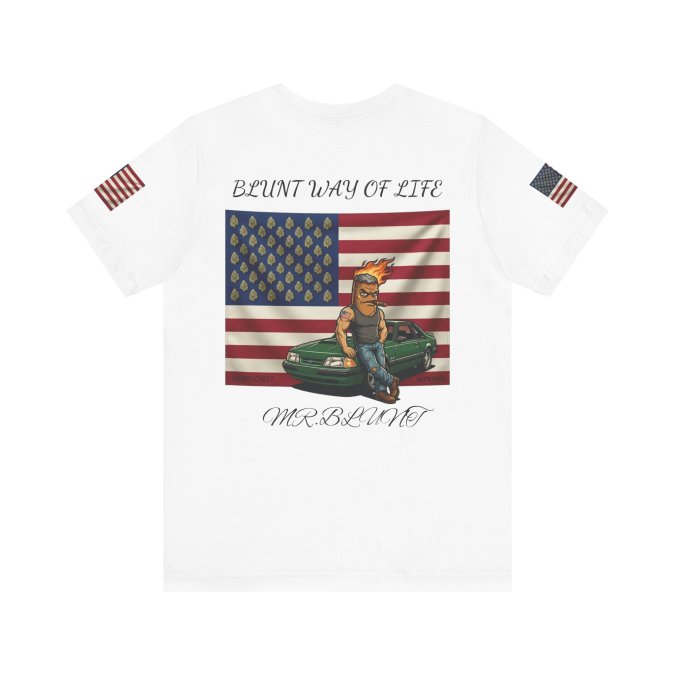
The graphics do the talking here: small flags on each sleeve and a larger back print featuring a vintage car and stylized flag. The DTF and DTG printing holds up to washing without cracking or peeling, which is the failure point on most graphic tees.
4. The Relaxed Fit: Pocket Flag Tee with 'Do Not Stand On' Text
Price: $22.98 | Best for: Everyday wear, gifting, budget-friendly foundation
This is the entry point for anyone skeptical about paying more for a t-shirt. At $22.98, it undercuts most of the collection while still delivering the construction quality that matters. The 100% Airlume combed and ring-spun cotton at a lightweight 4.2 oz is soft and breathable for warmer days.
The small chest print with the 'Do Not Stand On' text adds a wink of humor without screaming for attention. It reads like an inside joke for anyone who has spent time on a job site. The retail crew neck with a ribbed knit collar and shoulder tape keeps the shape crisp.
5. The Finishing Touch: Distressed Dad Hat
Price: $18.75 | Best for: Sun protection, finishing an outfit, adding character
A hat finishes an off-duty outfit in a way nothing else does. This one is built from 100% cotton twill with a low-profile, unstructured 6-panel body that sits comfortably without looking stiff. The deliberate distressing means it arrives looking like it has already been on a few road trips.
The self-fabric hideaway strap with a metal D-ring slider keeps the silhouette clean while allowing adjustment. The curved visor with 6-row stitching holds its shape. Small variations in distressing make yours unique.
Pick |
Price |
Best For |
Key Feature |
|---|---|---|---|
American Flag Pocket Tee |
$28.83 |
Daily wear |
6.0 oz combed cotton, boxy fit |
USA Flag Hoodie |
$35.18 |
Cool evenings |
8.0 oz cotton-poly, tubular knit |
Patriotic Graphic Tee |
$39.98 |
Car shows, meets |
DTF/DTG prints, retail fit |
Pocket Flag Tee 'Do Not Stand On' |
$22.98 |
Budget foundation |
4.2 oz Airlume cotton |
Distressed Dad Hat |
$18.75 |
Finishing touch |
100% cotton twill, low-profile |
Durable Casual Wear for Men: What to Look For in Fabric and Construction
The term "durable casual wear for men" gets thrown around loosely, but the definition is precise. It means clothing that resists abrasion, holds its color, and maintains its shape through repeated wear and washing, without looking like technical gear.
Fabric weight is your first filter. Anything below 5.0 oz in a t-shirt is a summer-only piece that will not survive regular rotation. Medium-weight fabrics from 5.5 to 6.5 oz hit the sweet spot for year-round wear. Heavyweight options above 7.0 oz work for hoodies and outer layers.
Construction is the second filter, and it is where most brands cut corners. Look for reinforced stitching at stress points, particularly the shoulders and side seams. A gusseted or articulated cut in jackets and work shirts allows a full range of motion without binding. Tubular knit construction without side seams reduces weak points and improves drape.
Fabric content matters more than most guys realize. A 100% cotton shirt breathes better but wrinkles more. A cotton-poly blend resists wrinkles and holds its shape but can feel less breathable. Garment-dyed finishes soften the fabric and give it a lived-in feel from the first wear.
How to Style Workwear for Casual Settings: 3 Outfit Formulas
How to style workwear for casual settings comes down to one principle: swap the safety components, keep the attitude. You do not need to abandon the aesthetic that feels natural; you need to dial it in so it reads as intentional.
Formula 1: The Weekend Wrench. American Flag Pocket Tee with well-worn jeans and the Distressed Dad Hat. This is the uniform for a Saturday spent on a project car or in the garage. The pocket holds your phone, the relaxed fit lets you move, and the hat keeps the sun off your neck.

MR.BLUNT WAY OF LIFE American Flag Pocket Tee
Formula 2: The Cool Evening Layer. USA Flag Hoodie over a plain t-shirt with dark denim and boots. This works for a fall cookout, a casual dinner, or a drive-in movie. The hoodie adds warmth without bulk, and the minimal chest print keeps the look clean.
Formula 3: The Statement Weekend. Patriotic Graphic Tee under an open flannel or chore coat with canvas pants. The graphic does the talking, so keep everything else neutral. This works for car meets, swap meets, or any event where you want to signal your interests without saying a word.
The throughline across all three formulas is fit. Relaxed does not mean sloppy. The shoulder seam should hit at your shoulder, the hem should fall around your hip, and sleeves should end at your wrist. A shirt that fits well looks intentional.
Building a Versatile Off-Duty Wardrobe Essentials Capsule
A versatile off-duty wardrobe essentials capsule solves the problem of standing in front of an overflowing closet with nothing to wear. The goal is not more clothes; it is the right clothes that all work together.
Start with four tops: one pocket tee, one graphic tee, one plain tee, and one hoodie. That covers everything from yard work to dinner out. Add two bottoms: one pair of well-worn jeans and one pair of canvas or duck pants. Finish with one hat and one pair of boots.
The capsule approach means every piece earns its place. Before buying anything, ask whether it works with at least three other items you own. If it only goes with one outfit, skip it.
Common Mistakes to Avoid When Buying Off-Duty Workwear
The first mistake is buying the same thing you wear to work. Your job-site gear is designed for protection and compliance, not comfort and style. Off-duty wear should prioritize breathability, fit, and aging.
The second mistake is ignoring fabric weight on graphic tees. Most graphic tees use lightweight fabric to keep printing costs down, which means they wear thin fast. A graphic tee at 6.0 oz or heavier will outlast a lightweight one by years.
The third mistake is skipping the care instructions. Garment-dyed pieces and distressed finishes need cold washes and low-heat drying to maintain their look. Hot water and high heat will accelerate fading and shrinkage.
The fourth mistake is assuming higher price always means higher quality. Price reflects brand markup, marketing, and overhead as much as materials. What matters is fabric weight, construction details, and how the piece is finished.
Final Verdict: Choose Pieces That Age as Well as You Do
The best clothing for tradesmen off duty does not try to hide where you came from. It respects the standards you held on the job and applies them to the life you have built since. A shirt that holds its shape, a hoodie that blocks the wind, a hat that looks better with every scuff: these are tools for living comfortably.
XEDITION77 builds every piece around that idea, using hand-selected fabrics and construction details that survive the rotation. The relaxed fits accommodate real movement. The garment-dyed finishes and distressed details mean each piece develops character with wear.
Building this wardrobe does not require a big budget or a complete overhaul. Start with one piece that passes the four tests, wear it, wash it, and see how it holds up. Then add the next. Over a season, you will have a capsule that works as hard as you do.
Frequently Asked Questions
What is the 3-3-3 rule for clothing?
The 3-3-3 rule is a packing and wardrobe strategy where you plan for 3 tops, 3 bottoms, and 3 pairs of shoes to create a week of outfits. For tradesmen off duty, this method works well because it forces you to choose versatile pieces. One durable pair of jeans, a couple of quality tees, and a comfortable hoodie can cover everything from a casual dinner to running weekend errands.
How do you transition from workwear to casual off-duty clothing?
The key is changing fabrics and fit. Swap your heavy-duty work pants for a relaxed-fit jean or canvas pant. Trade your hi-vis or logoed shirt for a soft, garment-dyed tee in a neutral color. Add a clean hoodie or a crewneck sweatshirt as a layer. This shift signals you're off the clock while keeping the same rugged, practical style you're used to.
What features should tradesmen look for in off-duty apparel?
Focus on fabric weight and construction. Look for heavyweight cotton around 6 oz or more, reinforced stitching at the seams, and pre-shrunk materials that hold their shape. Details like double-needle stitching and side seams add durability. For fit, choose a relaxed cut that allows movement without looking baggy. These features ensure your off-duty clothes survive regular wear and washing.
Are workwear brands suitable for casual wear?
Yes, but with a caveat. Pure workwear brands often use stiff, heavy fabrics designed for protection, not comfort. For off-duty wear, look for pieces inspired by workwear but made with softer materials. A garment-dyed tee or a broken-in hoodie gives you that rugged look without feeling like you're still in uniform. The goal is comfort that still reflects your work ethic.
How do I know the fabric quality is good when buying online?
Check the fabric weight and composition listed in the product details. Look for 100% combed and ring-spun cotton, which indicates a softer, more durable fiber. Weights of 6 oz or higher suggest a substantial feel. Also, review the construction details like shoulder tape and double-needle stitching. These specifics tell you more about quality than marketing language.


