


Table of Contents
- How We Reviewed the Best Men's Clothing Brands for 2026
- Quality vs. Price: What You Actually Get at Each Tier
- Tips for Buying High-Quality Men's Clothing
- How to Build a Capsule Wardrobe for Men That Lasts
- Best Patriotic Shirts for Car Enthusiasts: A Closer Look
- Body-Type Fit Profiles: Getting the Silhouette Right
- Longevity, Repairability, and Supply Chain Transparency
- Frequently Asked Questions
Last Updated: September 26, 2026
How We Reviewed the Best Men's Clothing Brands for 2026
The men's clothing stores industry grew at a 4.3% compound annual rate between 2021 and 2026, according to IBISWorld's men's clothing stores industry analysis, which tells you the market is expanding faster than most wardrobes are improving. This best men clothing brands review from XEDITION77 cuts through the affiliate-driven lists and looks at what actually holds up: fabric weight, stitch density, and cost-per-wear.
The Metrics That Separate Good Brands From Great Ones
Four measurements decide whether a garment survives three years or three washes: fabric weight, stitch density, seam construction, and dye method. A 6.1 oz ring-spun cotton tee with double-needle seams and garment-dyed color outlasts a thin, piece-dyed shirt by a wide margin.
Metric |
Weak Garment |
Strong Garment |
|---|---|---|
Fabric weight |
Under 4.5 oz |
6.0 oz or heavier |
Seam type |
Single stitch |
Double-needle |
Dye method |
Piece-dyed |
Garment-dyed |
Side construction |
Cut and sewn |
Tubular knit |
Quality vs. Price: What You Actually Get at Each Tier
Price tiers follow a predictable pattern, and the middle tier usually offers the worst value. Budget and mid-tier production often share the same overseas cut-and-sew facilities, so the only real difference between a $14 tee and a $38 tee is the label, marketing spend, and wholesale margin. Past roughly $60, the money starts buying construction you can measure.
Tier |
Typical Price (Tee) |
Fabric Weight |
Seams |
Dye Method |
What You're Paying For |
|---|---|---|---|---|---|
Fast fashion |
$8-$15 |
4.0-4.5 oz |
Single stitch |
Piece-dyed |
Volume, trend speed, disposable fit |
Mid-market |
$25-$45 |
4.5-5.5 oz |
Single or mixed |
Piece-dyed |
Label, retail space, better cut |
Premium basics |
$55-$90 |
6.0-7.0 oz |
Double-needle |
Garment-dyed |
Cotton grade, seam durability, color depth |
Heritage / made-to-last |
$90-$180 |
7.0 oz+ |
Double-needle + taped |
Garment-dyed or overdyed |
Domestic labor, repair programs, resale value |
What the Tier Jump Actually Buys You
At the fast-fashion tier, cotton is typically open-end spun rather than ring-spun. Open-end yarn is cheaper and produces a rougher hand that pills faster. Ring-spun cotton, which dominates the premium tier, aligns fibers before spinning for a smoother surface and better abrasion resistance, explaining most of the comfort gap between a $12 tee and a $60 tee.
Where the Middle Tier Loses
The $25-$45 band is where most men overpay: the same 4.5 oz fabric and single-stitch hem as the $12 option, plus a nicer hangtag. The exceptions are brands that deliberately overbuild at mid-price, heavier blanks, garment dyeing, and reinforced shoulder taping under $50. Those exceptions exist, but you have to check the spec sheet, not the brand name.
A Practical Rule for Tier Selection
Buy at the bottom of the premium tier for anything you wear weekly (tees, underwear, socks). Buy at the heritage tier for anything with a long replacement cycle (boots, denim, outerwear). Skip the middle tier for basics unless the spec sheet shows 6.0 oz or heavier fabric and double-needle construction.
Cost-Per-Wear Math That Changes the Decision
A $26.58 tee worn 80 times costs 33 cents per wear. A $12 tee that fades and twists after 15 washes costs 80 cents per wear, and you replace it twice a year. The cheap shirt loses on arithmetic before comfort enters the conversation. Apply this formula: purchase price divided by realistic wears. Anything under 50 cents per wear is a solid investment piece.
The Resale Floor Nobody Talks About
One tier advantage competitors rarely mention is resale. Heritage-tier denim, boots, and work jackets hold a meaningful percentage of retail on the secondary market, which lowers cost-per-wear further. Fast-fashion basics resell for near zero. If you ever plan to sell a piece, the premium tier's real cost is lower than the sticker suggests.
Tips for Buying High-Quality Men's Clothing
Buy for construction first, style second, and never trust a "premium" label without checking the fabric content tag. These tips apply whether you shop online or in person.
- Check the fabric weight in ounces, not adjectives. Sellers list grams per square meter or ounces per square yard on good product pages.
- Look for garment-dyed finishes, which soften color and texture instead of sitting flat on the surface.
- Confirm the return window before ordering. A brand confident in its sizing gives you at least 30 days.
- Read the care instructions. Cold wash and low tumble dry preserve cotton for years.
- Prioritize natural fibers. Organic cotton and merino wool regulate temperature better than synthetic blends.
How to Build a Capsule Wardrobe for Men That Lasts
A capsule wardrobe for men is a small, interchangeable set of garments that covers most occasions with minimal pieces: 12 to 15 items that all work together, chosen for fabric quality and neutral color rather than seasonal trends. Most capsule guides stop at the item list; the part they skip is the selection logic, the rules that decide which 12 items belong in your capsule.
The Three Rules That Govern Every Capsule
Rule 1: Every piece must pair with at least three others. If a shirt only works with one pair of pants, it's a costume piece, not a capsule piece. Before buying, name three items already in your closet that the new piece will combine with. If you can't name three, don't buy it.
The 12-Piece Core and How to Layer It
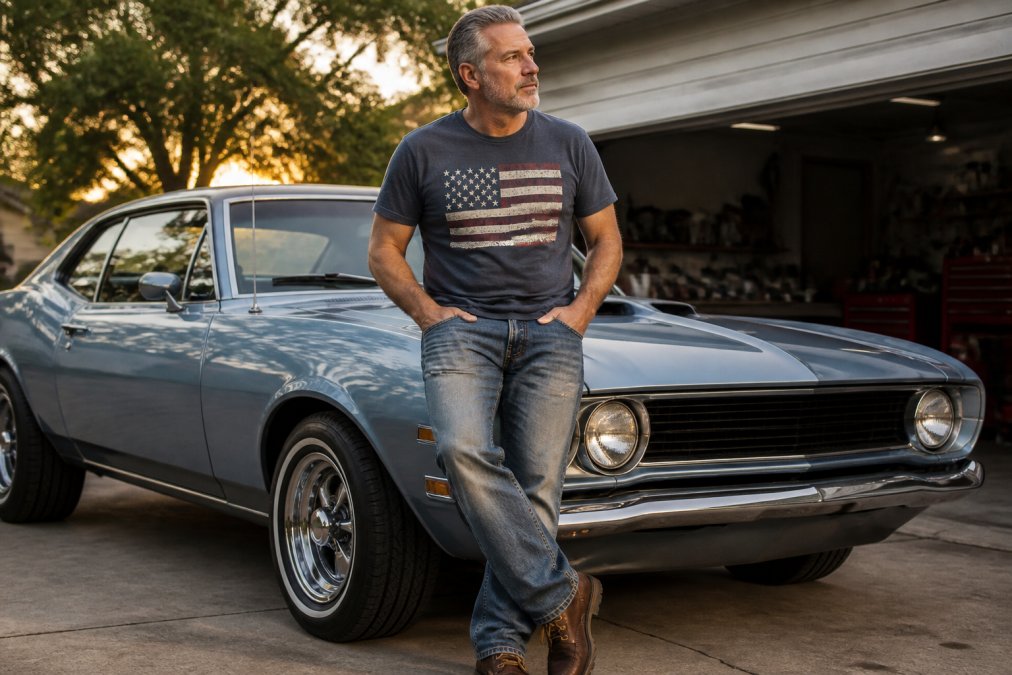
Start with four heavyweight tees, two pairs of dark denim, two chinos, one overshirt, one jacket, one sweater, and one pair of leather boots. Every piece should pair with at least three others. Layering works because a 6.1 oz tee under an overshirt handles three seasons without bulk. A garment-dyed Xedition 77 Vintage Flag Tee, Distressed American Flag Design at $26.58 fits this system cleanly: pre-shrunk, double-needle seamed, and muted enough to sit under anything.

The Replacement Cadence That Keeps a Capsule Alive
A capsule isn't a one-time purchase; it's a rotation with a maintenance schedule. A well-built capsule needs one to two replacements per year, not a full rebuild. Track wear counts on your three most-used pieces: when a tee crosses roughly 80 wears, watch the collar and hem; when denim crosses 300 wears, check the crotch seam and back pockets.
Body-Type Adjustments to the Core List
The 12-piece list assumes an average build. Adjust it:
- Broad shoulders or athletic build: swap one of the four tees for a relaxed-fit overshirt, and size up in the jacket. Retail-cut tees will pull at the chest and ride up at the hem.
- Lean or slim frame: keep the tees in a fitted cut with side seams, and add a second sweater instead of a second overshirt. Layering adds visual weight where the frame doesn't.
- Midsection weight: prioritize tubular-knit tees (no side seams) and straight-leg denim over slim. Tubular construction resists the twisting that makes fabric bunch at the waist.
What to Skip
Skip trend colors, graphic-heavy pieces, and anything that requires a specific shoe. Skip seasonal items unless they replace something already in the capsule. Skip buying two of the same item in different colors before you've worn the first one 20 times, you don't yet know if the fit works.
A Note on Cost-Per-Wear Inside the Capsule
A capsule's real advantage is that it concentrates wear. Twelve items worn regularly hit their cost-per-wear floor faster than thirty worn occasionally. A $60 tee worn twice a week for two years costs about 58 cents per wear; the same tee in a 30-item closet worn once a month costs $2.50 per wear. The capsule doesn't just simplify your morning, it lowers the effective price of everything in it.
Best Patriotic Shirts for Car Enthusiasts: A Closer Look
The best patriotic shirts for car enthusiasts combine durable construction with designs that read like garage-wall history rather than parade merchandise. The category rewards heavyweight cotton, garment-dyed color, and graphics that age well. XEDITION77 builds its line around this idea, and three pieces stand out for anyone who spends weekends under a hood.
Shirt |
Price |
Fabric |
Best For |
|---|---|---|---|
Vintage Flag Tee |
$26.58 |
6.1 oz ring-spun cotton |
Everyday rotation |
Statue of Liberty Tee |
$34.99 |
6.1 oz ring-spun cotton |
Understated wear |
F#*k Around Tee |
$33.99 |
6.1 oz ring-spun cotton |
Bold garage style |
Body-Type Fit Profiles: Getting the Silhouette Right
Fit profile matters more than size number, and most men wear one size too large in the shoulders. Broad-shouldered builds should choose relaxed cuts that drape without pulling at the chest. Leaner frames look better in retail fits with side seams that hold shape. If you carry midsection weight, tubular knit tees without side seams reduce twisting.
Longevity, Repairability, and Supply Chain Transparency
A garment's lifespan depends on three things most reviews ignore: stitch density, repairability, and where the blank was made. Double-needle stitching at 8 to 10 stitches per inch resists seam failure far better than single stitching. Repairability comes down to construction: a tubular knit tee with sewn-in labels can be re-hemmed, while a fused or glued seam cannot.
Frequently Asked Questions
What are the best quality men's clothing brands for everyday wear?
Look for brands that publish fabric weight and construction details. A 6.1 oz garment-dyed ring-spun cotton tee, for example, holds its shape and color through repeated washing far better than a thin 4 oz alternative. XEDITION77 uses 100% ring-spun US cotton with double-needle seams and tubular knit construction across its graphic tees, priced from $25.93 to $39.98, which puts real construction quality in reach for daily rotation.
How do you determine if a men's clothing brand is high quality?
Check four things: fabric weight and fiber content, stitch density at stress points, whether the garment is pre-shrunk, and whether the brand discloses manufacturing origin. Double-needle stitching on all seams and tubular knit construction (no side seams) are strong durability signals. Garment-dyed finishes also tend to age better because the color sits in the fiber rather than on top of it, so fading looks intentional rather than worn out.
What should I look for when reviewing men's apparel brands?
Start with cost-per-wear rather than sticker price. A $26.58 tee worn 80 times costs about 33 cents per wear; a $12 tee that pills after 15 washes costs 80 cents per wear and then needs replacing. Also check return policy, size range, and whether the brand publishes care instructions. XEDITION77 tees run S through 4XL and list cold-wash, low-tumble-dry care, which preserves the garment-dyed finish.
Which men's clothing brands offer the best value for money?
Value shows up in garment construction, not branding. Pre-shrunk 100% ring-spun cotton with double-needle seams and a sewn-in label generally outlasts cheaper alternatives. XEDITION77's range spans $25.93 to $39.98, and each piece lists fabric weight, fiber content, and care instructions, so you can compare on measurable specs rather than marketing claims. That transparency is what makes a price defensible over several years of wear.
What are the best American-made clothing brands for men?
Domestic manufacturing is one factor, but fiber origin and construction matter just as much. XEDITION77 uses 100% ring-spun US cotton in its heavyweight tees, though the blank garments are sourced from Honduras. If domestic production is your priority, ask brands directly where the fabric is milled and where the garment is cut and sewn, since those are often separate locations even for brands marketed as American.
Finding clothing that survives real work, real weekends, and real washes takes more than a brand name. XEDITION77 builds around hand-selected fabrics, timeless refinement, and exclusive Mr. Blunt themed designs that hold up season after season. Start with the heavyweight tees, check the construction yourself, and let cost-per-wear guide the rest. Shop now and build a wardrobe that earns its place.


