
October 23, 2026
Why Do My Clothes Lose Shape? Causes and Fixes

Last Updated: October 22, 2026
Quick Summary
Your clothes lose shape through a slow mix of fiber strain, heat, moisture, and repeated wear, not one dramatic moment. Stretching, shrinkage, and general wear look similar but need different fixes, so diagnose which problem you have before treating it. Matching your wash, dry, and storage routine to each fabric's weak point is what keeps fit intact.
- Stretching means fabric grew longer or wider; shrinkage means it pulled in, usually after heat.
- Tight, dense knits hold shape better than loose, open knits because loops have less room to shift.
- Wash knits in cold water on a gentle cycle and use a mesh bag to limit tugging.
- Lay knits flat on a mesh rack to dry and reshape them while still damp.
- Never hang a wet sweater, since it will stretch at the shoulders under its own weight.
Table of Contents
- Why Do My Clothes Lose Shape? The Real Causes
- How Fabric Type and Construction Affect Shape Retention
- How to Keep Clothes From Stretching in the Wash and Dryer
- How to Dry Clothes Without Stretching Them
- How to Fix Stretched Clothes: Step-by-Step
- How to Restore the Shape of a Sweater
- Storage and Everyday Habits That Protect Garment Shape
- Conclusion
- Frequently Asked Questions
Why Do My Clothes Lose Shape? The Real Causes
Your favorite tee comes out of the wash with a droopy neckline. At XEDITION77, we build our pieces from hand-selected fabrics, so we pay close attention to what keeps a garment looking right for years.
Shape loss is the gradual breakdown of a fabric's ability to return to its original dimensions after being stretched, washed, or dried. Three forces drive it: fiber structure, mechanical action, and heat.
The tricky part is that "lost shape" is often three different problems wearing one label. Fix the wrong one and you waste your time.
Stretching, Shrinkage, and Wear: Telling Them Apart
Stretching, shrinkage, and general wear look similar but need different fixes. Stretching means the fabric has grown longer or wider. Shrinkage means it has pulled in, usually after heat. Wear is the slow thinning and fuzzing that makes a garment look tired even when the size is right.
Here is how to tell them apart before you try anything:
| Problem | What You See | Usual Cause | Fixable? |
|---|---|---|---|
| Stretching | Longer sleeves, baggy knees, stretched neck | Hanging wet, tugging, agitation | Often, with moisture and reshaping |
| Shrinkage | Shorter length, tighter fit all over | Heat from washing or drying | Sometimes, with careful re-stretching |
| Wear | Pilling, thin spots, faded dye | Friction and repeated washing | Rarely, mostly prevention |
A stretched cotton tee and a shrunken wool sweater are opposite problems. Treat them as the same and you make both worse.
How Fabric Type and Construction Affect Shape Retention
Fabric type decides how much shape a garment can hold in the first place, and two garments made from the same fiber can behave very differently depending on how they were built. The practical move is to know your fabric's weak point before the first wash, not after the neckline droops.
Fiber-by-fiber: where each fabric fails and how to care for it
| Fabric | Why it loses shape | Wash | Dry | Store |
|---|---|---|---|---|
| Cotton jersey | Fibers relax and grow with agitation and wet weight; necklines and cuffs give first | Cold, gentle cycle, inside out, mesh bag for knits | Low heat or air fluff; remove slightly damp | Fold knits; hang wovens on wide hangers |
| Wool | Scales felt and interlock with heat and agitation, causing shrinkage; wet wool stretches under its own weight | Cold, wool or gentle cycle, minimal agitation, no wringing | Lay flat on a mesh rack, reshape while damp, away from heat | Fold; never hang; cedar or breathable bags |
| Viscose and rayon | Weak when wet; loses strength and stretches easily on a hanger or in a crowded drum | Cold, gentle, mesh bag, low spin | Lay flat or hang only when nearly dry on a padded hanger | Fold heavy pieces; hang light wovens on padded hangers |
| Polyester | Generally stable, but heat can set wrinkles and relax blends; pilling at friction points | Cool to warm, gentle, inside out | Low heat; remove promptly to avoid heat-set creases | Hang or fold; avoid prolonged heat exposure |
| Elastane blends | Elastic fibers degrade with heat, chlorine, and repeated stretching, so recovery fades | Cold, gentle, low spin, no fabric softener on stretch fibers | Air dry or low heat; never high heat | Fold; rotate wears so elastic recovers |
| Loosely knit sweaters and cardigans | Open knit structure shifts; wet weight pulls shoulders and hems | Cold, gentle, mesh bag, minimal agitation | Always flat; reshape to measurements while damp | Fold; avoid hangers entirely |
A tight, dense knit holds its shape better than a loose, open one because there is more fiber contact and less room for loops to shift. Short-staple, low-quality fibers break down and pill faster than long-staple ones, which is why two cotton tees at the same price can age very differently.
Construction details that decide whether a garment holds its fit
- Knit structure: Ribbed necklines and cuffs recover better than plain jersey because the rib adds elastic structure. Single-jersey bodies stretch more than interlock or double-knit ones.
- Grain direction: A garment cut off-grain twists and pulls in the wash; side seams that swing forward are an early sign.
- Seams and stabilization: Reinforced shoulder seams, stay tape at necklines, and clear elastic in waistbands resist stretch. A neckline with no stabilization will ripple and grow.
This is where fabric quality shows. If you want a garment to hold its shape, start with better fiber and tighter construction before worrying about detergent. Read the care label before the first wash and match your routine to the fabric's weak point, heat for wool and elastane, wet weight for viscose and heavy knits, agitation for cotton jersey.
How to Keep Clothes From Stretching in the Wash and Dryer
The washing machine is where most shape loss happens. Agitation, hot water, and a fast spin cycle all pull at fibers. To keep clothes from stretching, work through these habits:
- Turn garments inside out before washing to reduce surface friction.
- Use cold water on a gentle cycle for knits and stretch fabrics.
- Skip the heavy spin or choose a low-spin setting.
Heat exposure is the other culprit. Hot washes and tumble drying relax elastic fibers and shrink wool. The FTC's care labeling guidance reminds shoppers that care instructions exist for a reason, so read the label before the first wash, not after.
How to Dry Clothes Without Stretching Them
Drying method decides whether a garment keeps its fit. To dry clothes without stretching, avoid hanging heavy wet knits, which pull under their own weight. The right approach depends on the fabric:
- Lay knits flat on a mesh rack to dry, reshaping them while damp.
- Hang wovens and light cottons on wide, padded hangers.
- Use low heat or air fluff if you must tumble dry.
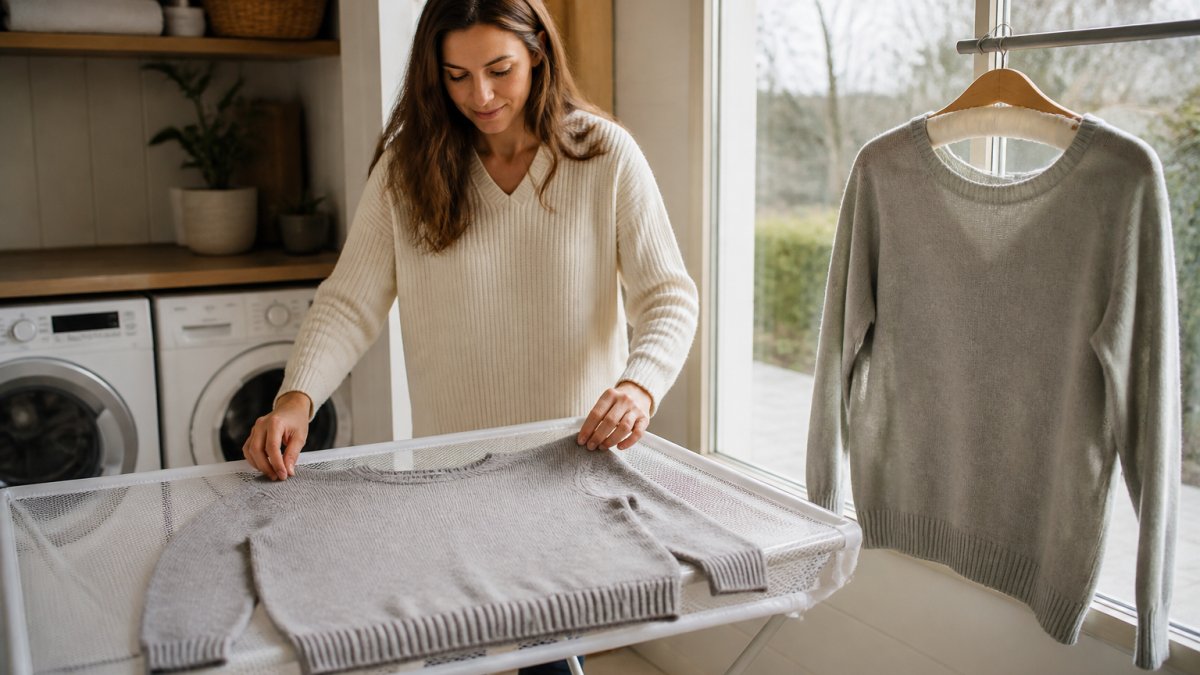
Wet clothes are at their most fragile. A soaked sweater on a thin hanger will stretch at the shoulders before it ever dries.
How to Fix Stretched Clothes: Step-by-Step
You can often fix stretched clothes at home with water and gentle reshaping, but the method has to match the fabric and the type of stretch. A stretched cotton tee, a baggy wool sweater, and a blown-out elastane waistband need different approaches, and some damage will not come back.
Before you start: measure and diagnose
- Measure the garment at the chest, waist, sleeve, and hem and write the numbers down. You need a target to reshape to.
- Identify the stretch type. A longer sleeve or baggy knee is stretch. A shorter, tighter fit after heat is shrinkage. A thin, pilled area is wear, which reshaping will not fix.
- Check the care label to confirm the fabric can take moisture and to see whether heat is the likely cause.
General reshaping process
- Soak the garment in cool water for about 15 minutes. For wool, add a small amount of gentle conditioner to relax the fibers.
- Gently squeeze out water. Never wring or twist.
- Lay it flat on a towel and roll to press out excess moisture.
- Reshape by hand, easing stretched areas back toward your recorded measurements.
- Pin edges in place if needed, then air dry flat, away from direct heat.
- Re-measure when dry to confirm the garment is back to size.
Material-specific recovery
- Cotton jersey: A cool soak and gentle reshaping while damp works well for necklines and cuffs. Dry flat or on low heat; high heat sets the stretch.
- Wool: Soak in cool water with conditioner, press water out in a towel, then reshape to measurements and dry flat. Never hang wet wool. Felted wool will not return to size.
- Viscose and rayon: Handle wet fabric minimally; it is weak when wet. Reshape while damp and dry flat or on a padded hanger only when nearly dry.
When a garment will not come back
Some stretch is permanent. Heat-degraded elastane, felted wool, and fibers stretched past their recovery point will not return to original dimensions. If the garment stays out of size after one careful reshaping attempt, further soaking and tugging risks tearing dry fabric. At that point, the practical options are tailoring, repurposing, or retiring the piece.
How to Restore the Shape of a Sweater
Restoring a sweater starts with knowing whether it stretched or shrank. To restore the shape of a sweater that stretched, soak it in cool water, then lay it flat and ease it back to its original measurements. For a shrunken wool sweater, a cool soak with a gentle conditioner can relax the fibers, then stretch it gently while damp.
A few rules keep the process safe:
- Never hang a wet sweater. It will stretch at the shoulders.
- Measure before and after so you know when it's back to size.
- Dry flat and away from direct heat.
Storage and Everyday Habits That Protect Garment Shape
Everyday habits matter as much as laundry day. Repeated stretching from wear takes a toll: elbows, knees, and necklines give first. A few small changes protect garment shape between washes:
- Fold knits and heavy items instead of hanging them.
- Use wide hangers for wovens to support the shoulders.
- Rotate your wardrobe so no single piece takes daily strain.
Repeated wear and repeated stretching add up. Giving clothes a rest day between wears helps fibers recover.
Conclusion
Shape loss is rarely one bad wash. It's the slow result of heat, agitation, wet hanging, and daily strain adding up over a garment's life. Better fabric, careful washing, flat drying, and smart storage all work together to keep fit intact. At XEDITION77, our hand-selected fabrics and timeless designs are built to hold their shape through regular wear, with care that keeps them looking right for years.
Frequently Asked Questions
Why do my clothes lose their shape after washing?
Most shape loss happens in the wash cycle. Agitation from the drum pulls knit loops and fibers out of position, and warm or hot water relaxes the fibers so they stay stretched. Spin cycles add more pull, especially on wet, heavy garments. Use cold water, a gentle cycle, and mesh bags for knits, and skip the dryer for anything with stretch.
How can I keep clothes from stretching when I hang them wet?
Wet fabric is heavier and more pliable, so hanging a soaked sweater or tee on a hanger lets gravity pull the shoulders and hem out of shape. To keep clothes from stretching, either lay knits flat to dry on a mesh rack or roll them in a towel first to remove excess water. If you must hang, use wide padded hangers and support the garment's full width. Heavier items like wool sweaters should always dry flat.
Can you fix a shirt that has stretched out?
Often yes, especially if the stretch is recent and the fabric is cotton or a cotton blend. Soak the shirt in cool water for 15 to 20 minutes, gently press out water without wringing, then lay it flat and reshape the seams, collar, and cuffs with your hands. Let it air dry completely before wearing. Heat from an iron on low steam can help set the shape. Severely stretched ribbing or worn-out elastic usually can't be fully restored.
Does putting clothes in the dryer make them lose shape?
Tumble drying is one of the biggest causes of shape loss. Heat relaxes fibers and breaks down elasticity in stretch fabrics, while the tumbling action pulls knits and seams out of alignment. Cotton can shrink in the dryer, but stretch fabrics usually sag instead. Air drying is safer for almost everything, and if you do use a dryer, choose the lowest heat setting and remove items while slightly damp.


