


Table of Contents
- Why Men's Clothing for a Relaxed Lifestyle Is Booming in 2026
- Men's Wardrobe Essentials That Do the Heavy Lifting
- How to Build a Capsule Wardrobe for Men Without Overthinking It
- Quiet Luxury for Men: How to Look Refined Without Trying
- Fabrics, Fit, and Silhouette: What Actually Decides Comfort
- Caring for Relaxed Fabrics So They Last More Than a Season
- How to Wear Men's Clothing for a Relaxed Lifestyle at Any Age
- Conclusion
- Frequently Asked Questions
Last Updated: September 28, 2026
Why Men's Clothing for a Relaxed Lifestyle Is Booming in 2026
Men's clothing for a relaxed lifestyle has moved from niche preference to dominant market force. According to Mintel's 2026 casualization research, 52% of men now prioritize comfort when dressing, and 66% identify as stylish while doing it. At XEDITION77, we've watched this shift reshape what men actually reach for each morning.
The Shift to Premium Basics
Men aged 25-35 are spending 20% more on fewer, higher-quality pieces, according to Into The AM's 2026 fashion report. The fast-fashion volume game is losing. Durability and construction are winning.
Men's Wardrobe Essentials That Do the Heavy Lifting
The core of a relaxed wardrobe is a small set of versatile pieces that mix without effort. Men's wardrobe essentials for this approach are simple: neutral tees, one or two sweatshirts, indigo denim, relaxed trousers, and an unstructured blazer.
The 3-3-3 Rule for Building a Relaxed Rotation
Three tops, three bottoms, three layers. Every piece works with every other piece. If a new item doesn't combine with at least six existing pieces, it doesn't belong in the rotation.
How to Build a Capsule Wardrobe for Men Without Overthinking It
A capsule wardrobe for men is a small, intentional set of interchangeable pieces that covers most situations without decision fatigue. The version most guides skip is the one that actually matters for a relaxed lifestyle: a capsule that moves from a Tuesday desk to a Saturday errand without a costume change. That's the transition most men struggle with, and it's the one this framework is built around.
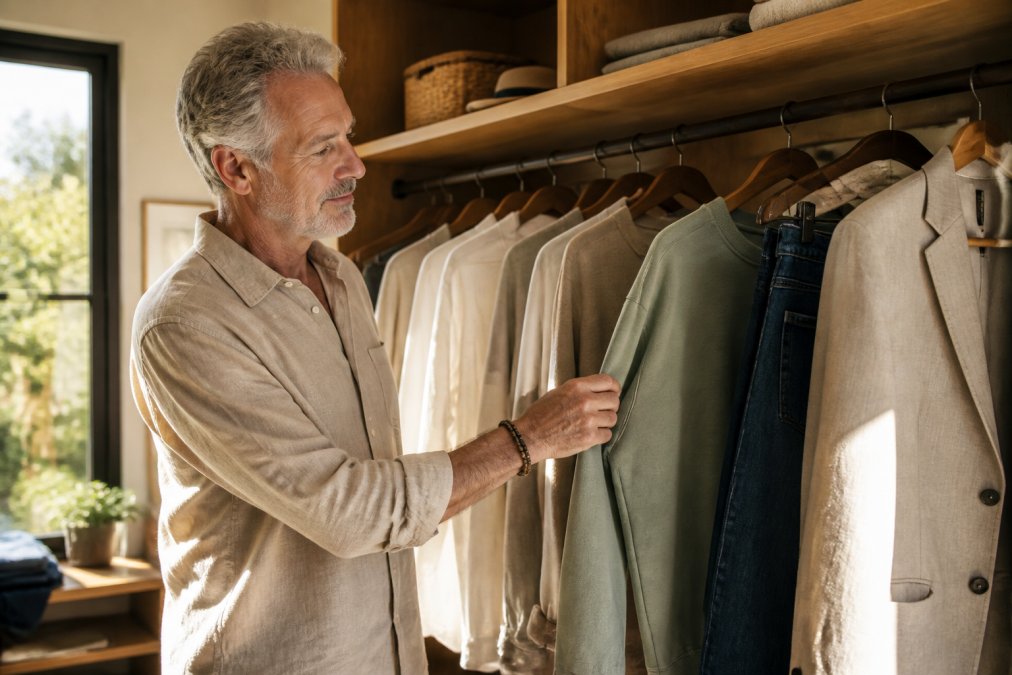
The 12-Piece Relaxed Capsule (and Why 12)
A working capsule for a relaxed lifestyle lands between 12 and 15 pieces. Below 12, you're doing laundry every three days. Above 15, you've rebuilt the closet you were trying to escape. Here's a category breakdown that holds up across work, weekend, and travel:
- 4 tops: two garment-dyed cotton tees, one heavyweight crewneck, one long-sleeve henley or oxford.
- 3 bottoms: indigo straight-cut denim, one relaxed chino in olive or stone, one pull-on or drawstring trouser for true off-duty days.
- 3 layers: an unstructured blazer, a zip-front or quarter-zip knit, and a light overshirt that works open or buttoned.
- 2 shoes: one clean leather sneaker, one loafer or chukka that reads slightly dressier.
The Work-to-Weekend Test
The single filter that separates a relaxed-lifestyle capsule from a casual-only one: every piece must survive one professional-adjacent setting. A relaxed chino in stone passes. A graphic sweatpant does not. An unstructured blazer in a drapey wool blend passes over a tee and denim. A hoodie does not.
Run each candidate through three questions:
Rick's Crabs T‑Shirt With Mr.Blunt way →
- Can it pair with at least six other pieces already in the rotation?
- Can it be worn to a casual Friday, a client coffee, or a dinner without reading as underdressed?
- Does it hold its shape after 20 washes?
Follow these steps to execute:
- Audit. Set aside anything unworn in 12 months.
- Choose a neutral palette. Two base colors, one accent.
- Buy for fit, not size. Shoulders and chest decide, not the tag.
- Test combinations. Each piece must work with six others.
- Replace, don't add. New item in means old item out.
Why the Capsule Is the Real Style-Versatility Play
A well-built capsule typically runs 12-15 pieces and covers work, weekend, and travel. That's the whole point of style versatility, not owning more, but owning pieces that flex further. The men who report the least decision fatigue in the morning aren't the ones with the biggest closets. They're the ones whose closets have the fewest orphans.
Quiet Luxury for Men: How to Look Refined Without Trying
Quiet luxury for men means choosing quality materials and clean silhouettes over visible branding. The look reads as expensive because the fabric and fit are good, not because a logo says so.
Fabrics, Fit, and Silhouette: What Actually Decides Comfort
Comfort comes down to three variables: fabric breathability, fit through the shoulders and chest, and silhouette. Get all three right and the clothing disappears on your body. Get any one wrong and you feel it all day, a collar that rides, a hem that pools, a fabric that traps heat. Most guides stop at "buy natural fibers." The useful version explains why, and then tells you how relaxed fit actually behaves on your specific frame.
Breathable Fabrics and Natural Fibers
Breathable fabrics like cotton and linen regulate temperature and soften with wear. The mechanism is simple: natural fibers absorb and release moisture vapor, while most synthetics trap it against the skin. That's why a cotton tee feels cooler than a polyester one at the same weight, and why linen feels cool to the touch before you even put it on.
Fit and Proportion for Real Bodies
Fit and proportion matter more than any single measurement. Relaxed fit doesn't mean oversized. It means room through the chest and thigh without excess fabric pooling at the hem. The distinction is where most men get it wrong, and it's where body type changes the answer.
Here's how relaxed fit actually behaves across builds:
- Tall (6'2" and up): Standard relaxed cuts often run short in the body and sleeve. Look for tops with a longer body length and a sleeve that hits at or just past the wrist bone. Straight-cut trousers work, but check the inseam, a 30" inseam on a relaxed chino will read cropped on a tall frame. Hem to a slight break, not a full one.
- Athletic (broad shoulders, narrower waist): Relaxed cuts can balloon at the waist because they're drafted for a straighter torso. An unstructured blazer with a soft shoulder and a slight taper through the body balances this better than a boxy overshirt. For bottoms, a relaxed-taper chino, roomy through the seat and thigh, tapered below the knee, reads intentional instead of sloppy.
- Stocky or broad-framed: The goal is vertical line, not volume. Straight-cut trousers and unstructured jackets balance proportion better than slim fits, which can look strained. Avoid heavy horizontal color blocking at the waist. A single-breasted blazer worn open creates a vertical column that lengthens the torso.
- Lean or narrow-framed: Relaxed fit can swallow you if the shoulder seam drops too far. Look for a relaxed cut with a defined shoulder seam, not a drop-shoulder, and a hem that hits at mid-fly, not below it. Layering helps here: an overshirt over a tee adds visual weight without adding bulk.
Silhouette: The Line You're Actually Drawing
Silhouette is the shape your outfit makes from ten feet away. Relaxed lifestyle dressing works best when the silhouette is a soft column, shoulders, torso, and leg roughly aligned, with no sharp taper and no excess width. That's why an unstructured blazer in a drapey fabric does more for a man's appearance than any logo ever will. Neutral colors, natural fibers, and clean lines do the work.
Rick's Crabs T‑Shirt With Mr.Blunt way →
Caring for Relaxed Fabrics So They Last More Than a Season
Wash cold, dry low, and skip the dryer when you can. Garment-dyed cotton and cotton-poly blends hold color and shape far longer with cold-water washing.
Fabric |
Wash Temp |
Dry Method |
Lifespan With Proper Care |
|---|---|---|---|
Garment-dyed cotton |
Cold (max 90F) |
Tumble low |
3-5 years |
Cotton-poly blend |
Cold (max 90F) |
Tumble low/medium |
4-6 years |
100% linen |
Cold, gentle |
Hang dry |
5+ years |
Indigo denim |
Cold, inside out |
Hang dry |
3-5 years |
How to Wear Men's Clothing for a Relaxed Lifestyle at Any Age
Relaxed style works at 25 and at 60 because it's built on fit and fabric, not trends. The difference is in the details: younger men can lean into oversized silhouettes and textural contrast, while men over 40 usually look sharper in cleaner lines and structured-but-soft layers.
Conclusion
Building a wardrobe that supports a relaxed lifestyle takes discipline: fewer pieces, better materials, and a willingness to let go of what doesn't work. XEDITION77 makes that easier with hand-selected fabrics, timeless refinement, and exclusive Mr. Blunt themed designs built for comfort that lasts. Explore the latest arrivals and find pieces that fit the way you actually live. Shop now and start building a rotation you'll reach for every day.
Frequently Asked Questions
What is the 3-3-3 rule for men's clothing?
The 3-3-3 rule is a simple framework for building a relaxed wardrobe without overbuying: three tops, three bottoms, and three pairs of shoes. It works because those nine pieces can be mixed into dozens of outfits. Start with neutral colors like navy, olive, gray, and off-white so everything pairs together. Then add layers such as a hoodie or crewneck sweatshirt for cooler days. The goal is versatility, not volume, which is why it fits so well with men's clothing for a relaxed lifestyle.
What are the essential pieces for a relaxed men's wardrobe?
Start with men's wardrobe essentials that cover most days: two or three heavyweight cotton tees, a garment-dyed graphic tee, one or two crewneck sweatshirts, a hoodie for layering, straight-cut indigo denim, relaxed chinos, and a pair of clean canvas sneakers or boots. Add an unstructured blazer for informal elegance. Choose breathable fabrics and relaxed fits so each piece works from a garage session to a casual dinner. A small, well-chosen set beats a closet full of fast-fashion duplicates.
How can men achieve a quiet luxury look with relaxed clothing?
Quiet luxury for men comes down to fabric, fit, and restraint. Skip visible logos and loud patterns. Choose natural fibers like cotton, linen, and wool blends, then let the texture do the talking. Keep a neutral palette of navy, gray, cream, and olive, and make sure the fit is relaxed but not sloppy. A well-made crewneck sweatshirt or a soft button-down in a muted tone reads more refined than a busy designer piece. The point is understated quality you can feel, not branding you can spot across a room.
What fabrics are best for a comfortable, refined lifestyle?
Breathable fabrics and natural fibers perform best for everyday comfort. Look for heavyweight ring-spun cotton for tees and sweatshirts, 100% European linen for warm-weather shirts, and cotton-poly blends when you want warmth with durability. Garment-dyed cotton gives a broken-in feel from the first wear. One trade-off: linen wrinkles easily, so if you want a crisp look, choose a cotton-linen blend instead. Whatever you pick, check the care label and follow it, since cold washing and low-heat drying protect the fabric's shape and color.


